

We decode the most popular certifications: Fair Trade, Direct Trade, Rainforest Alliance, Organic, Cup of Excellence, UTZ, etc.
Previous post
What Is Specialty Coffee? A Complete Guide to Specialty Coffee
Date
When talking about types of coffee beans, two names dominate the conversation: Arabica and Robusta. Together, these two coffee species account for nearly all coffee consumed worldwide.
But what exactly is the difference between Arabica and Robusta coffee beans, and why is Arabica usually used in specialty coffee?
In this guide we explore their differences in flavor, caffeine content, growing conditions, and quality.
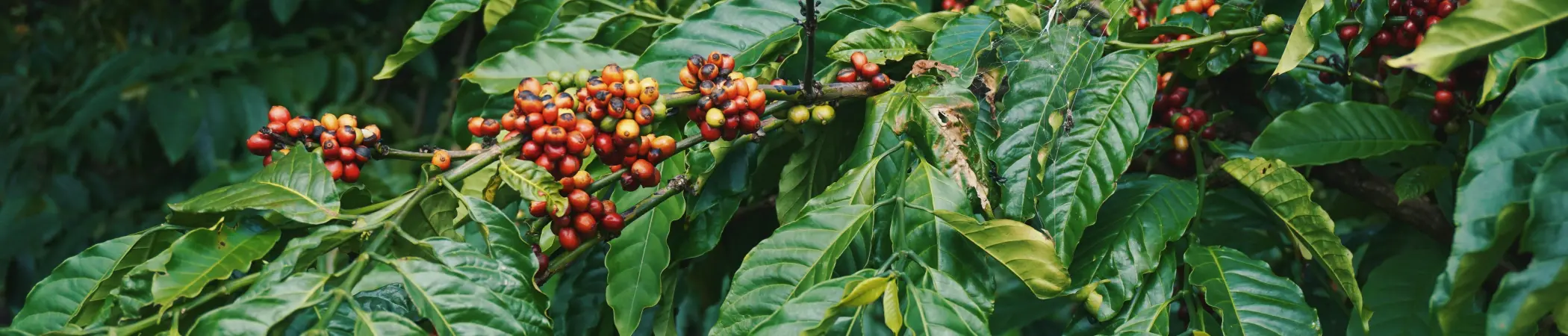
Arabica coffee (Coffea arabica) is the most popular species in the world of specialty coffee. It represents roughly 60–70% of global coffee production.
Arabica beans are typically grown at high altitudes in countries such as:
- Ethiopia
- Colombia
- Brazil
- Guatemala
- Kenya
These environments allow the coffee to develop complex and refined flavors.
- smooth and balanced flavor
- complex aroma
- fruity, floral, or chocolate notes
- lower caffeine content
- brighter acidity
Because of these qualities, most specialty coffee is made from Arabica beans.
Robusta coffee (Coffea canephora) is the second most widely produced coffee species.
It is mainly grown in countries such as:
- Vietnam
- Brazil
- Indonesia
- Uganda
Robusta plants are more resistant to pests and harsh climate conditions, making them easier and cheaper to cultivate.
- stronger, more bitter taste
- heavier body
- less aromatic complexity
- higher caffeine content
- earthy or woody notes
Robusta beans are often used in commercial coffee blends and espresso blends.
The differences between Arabica and Robusta coffee beans can be seen in several important factors.
Arabica coffee offers more complex and nuanced flavors.
Robusta tends to have a stronger and more bitter taste.
Robusta contains almost twice as much caffeine as Arabica.
This contributes to its stronger flavor and bitterness.
Arabica grows best at higher altitudes and cooler climates.
Robusta can grow at lower altitudes and hotter climates.
Because it is more delicate to cultivate and offers higher quality, Arabica coffee is usually more expensive.
In the world of specialty coffee, almost all beans are Arabica.
Arabica beans offer:
- greater flavor complexity
- richer aromatic profiles
- unique origin characteristics
Specialty coffee roasters carefully select high-quality Arabica beans to highlight these qualities.
At Blue Faro we focus on sourcing and roasting coffees that showcase distinctive origin flavors and exceptional quality.
It depends on your taste preferences.
Choose Arabica if you prefer:
- complex flavors
- balanced acidity
- specialty coffee quality
Choose Robusta if you prefer:
- stronger coffee
- higher caffeine
- thicker crema in espresso

We decode the most popular certifications: Fair Trade, Direct Trade, Rainforest Alliance, Organic, Cup of Excellence, UTZ, etc.
Learn the meaning of key coffee tasting terms, including aroma, acidity, body, balance, complexity, flavor, and aftertaste.

What is a coffee blend and why do roasters combine different coffees? Learn how blends are created, their advantages and the role of coffee extractivity.