
Is your espresso running too fast or choking? Stop wasting beans and learn how to dial in your professional grinder with Blue Faro.
Previous post
Dialing In: How to Calibrate a Professional Espresso Grinder

Date
A coffee capsule machine is a brewing system designed to prepare coffee from individual portions of roasted and ground coffee sealed inside a capsule.
This system has changed the way millions of people prepare coffee at home. Its main advantage is convenience: the dose is already prepared, the coffee is protected from the environment, and the machine can produce a drink within seconds with very little effort from the user.
But how does a coffee capsule machine actually work? What is inside a coffee capsule, and why can it preserve coffee for months?
The modern concept of coffee capsules began to develop during the second half of the twentieth century. In 1978, Swiss engineer Éric Favre, who worked for Nestlé, obtained a patent related to a capsule-based coffee brewing system.
However, capsule coffee became widely commercialized during the following decades, as different manufacturers developed their own capsule formats and brewing machines.
These systems transformed coffee preparation into an extremely simple process: insert a capsule, activate the machine and receive a ready-to-drink coffee.
Although capsule systems differ from one another, the basic principle is similar.
Once the capsule is inserted into the machine, the brewing mechanism pierces it. Hot water is then introduced into the capsule and comes into contact with the ground coffee.
In systems designed to produce espresso-style beverages, a pump generates pressure that forces water through the coffee. Some machines advertise pressures of 15 or 19 bars, or even higher. However, the maximum pump pressure should not automatically be interpreted as the actual pressure experienced by the coffee during extraction.
As water passes through the coffee, it dissolves a portion of the soluble compounds responsible for flavor and aroma before leaving the capsule and entering the cup.
After brewing, the used capsule is either ejected automatically or stored in a waste container, depending on the machine design.
A coffee capsule contains an individual portion of roasted and ground coffee.
The amount of coffee depends on the system and format, but many espresso-style capsules contain approximately 5–9 grams of coffee.
The grind size and dose are selected specifically for the brewing system. A capsule is therefore not simply a small package of ground coffee. Its geometry, particle size, coffee dose and water flow are all part of a system designed to work together.
Capsules can be made from different materials, including:
aluminum;
food-grade polymers;
paper or cellulose-based materials;
combinations of different materials.
Each system uses its own structure to control how water interacts with the coffee.
One of the main purposes of capsule packaging is to protect coffee from oxygen, moisture, light and other factors that accelerate deterioration.
After roasting, coffee continues to release carbon dioxide and is also susceptible to oxidation. Capsule packaging therefore aims to minimize the coffee's exposure to oxygen.
Depending on the system, capsules may be sealed using protective atmospheres or inert gases during packaging.
This helps preserve aromatic compounds and reduce oxidation.
Shelf life varies considerably depending on the manufacturer, packaging system, capsule material, coffee blend and storage conditions. There is therefore no single shelf-life period that applies to every coffee capsule.
Although machines differ significantly between manufacturers and models, most capsule machines contain several basic components.
This system heats the water to the temperature required for brewing.
Many domestic capsule machines use a thermoblock, which allows small amounts of water to be heated quickly.
The pump generates the flow and pressure required to move water through the capsule.
Pressure is an important part of espresso brewing, although the pressure advertised by a manufacturer should not automatically be considered the actual extraction pressure at the coffee bed.
This mechanism holds the capsule in the correct position and pierces it so that water can enter and leave.
The geometry and position of the openings influence how water flows through the coffee.
The electronic control system manages different functions, including:
water heating;
pump activation;
extraction duration;
water volume;
brewing programs;
control-panel signals.
More advanced machines can automatically manage several brewing parameters.
Most capsule machines allow the user to select different beverage volumes.
The amount of water has a direct effect on beverage concentration and intensity. Using an espresso capsule with a much larger volume of water than intended can therefore produce a more diluted drink with a different flavor profile.
One of the most interesting characteristics of capsule systems is that the user has considerably less control over extraction variables than with traditional espresso preparation.
When preparing espresso manually, a barista can adjust:
dose;
grind size;
distribution;
tamping;
temperature;
pressure;
extraction time;
brew ratio.
With a capsule machine, many of these variables have already been determined by the manufacturer.
This provides one major advantage: consistency.
The user does not need to weigh the coffee, grind it or adjust a grinder. The capsule already contains a predetermined dose and is designed to work within a particular brewing system.
The trade-off is reduced control and customization.
Not necessarily.
The quality of a coffee depends on many factors, including green coffee quality, variety, processing method, roasting, grinding, storage and extraction.
A capsule can protect and dose coffee very efficiently, but the brewing system also imposes certain limitations on the extraction process.
For example, a capsule may contain excellent coffee, but the final beverage will still depend on how effectively the capsule system is designed to extract it.
Conversely, a capsule containing low-quality coffee does not become high-quality simply because it is well packaged.
A capsule is ultimately a format for coffee preservation and brewing, not a guarantee of quality in itself.
Fast preparation.
Controlled individual dosing.
Ease of use.
Minimal technical knowledge required.
Effective protection from oxygen.
Consistent brewing.
Less loose coffee waste during preparation.
Less control over extraction.
Dependence on a specific capsule system.
More packaging waste than traditional whole-bean brewing.
Limited ability to modify the brewing recipe.
Final quality depends heavily on the coffee and the design of the system.
The capsule coffee market includes numerous systems and manufacturers, including:
Nespresso
Dolce Gusto
Lavazza
illy
Caffitaly
Bialetti
and various other compatible capsule systems.
It is important to distinguish between machine manufacturers, capsule manufacturers and capsule systems, since different formats are not necessarily interchangeable.
The answer is straightforward: they remove much of the complexity of coffee preparation.
There is no need to know the correct dose, adjust a grinder, distribute the coffee, tamp the puck or manually control extraction time.
Most of these variables are handled by the system itself.
From a consumer perspective, the primary value proposition is not necessarily achieving the highest possible coffee quality. It is achieving a fast, convenient and consistent beverage.
That is precisely where capsule coffee has found its success.
Capsule machines represent a fundamentally different approach to coffee brewing from manually prepared specialty coffee.
While a barista attempts to control every extraction variable, a capsule system attempts to control those variables before the consumer even begins brewing.
Neither approach is inherently right or wrong.
The choice depends on what you value: speed and consistency, or greater control over brewing and the ability to adjust individual parameters.
Ultimately, a coffee capsule is much more than a small container of ground coffee. It is a complete brewing system in which coffee, grind size, dose, packaging, machine, water, pressure and extraction are designed to work together.
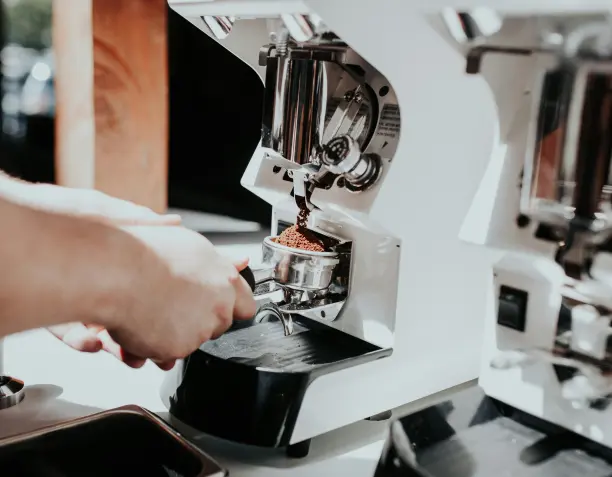
Is your espresso running too fast or choking? Stop wasting beans and learn how to dial in your professional grinder with Blue Faro.
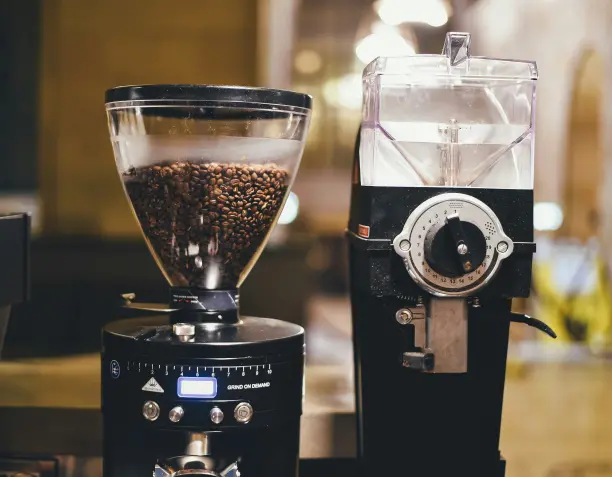
Explore how coffee grinder types (burr vs. blade) and grind size consistency impact flavor. Find the perfect setting for Espresso, Pour-over, and French Press.
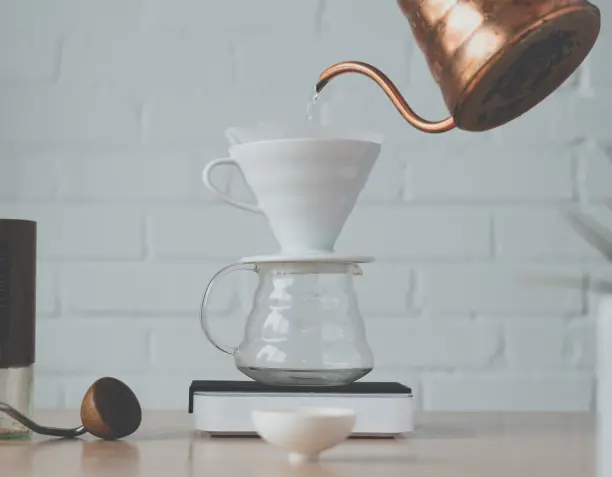
Learn how dripper materials affect brewing temperature, extraction, and flavor. Compare plastic, ceramic, glass, and stainless steel coffee drippers.