
Learn how coffee capsule machines work, what is inside a coffee capsule, how capsule coffee is preserved, and how pressure and extraction affect the final cup.
Next post
Coffee Grinder Guide: How Grinding Affects Flavor and Extraction
Date
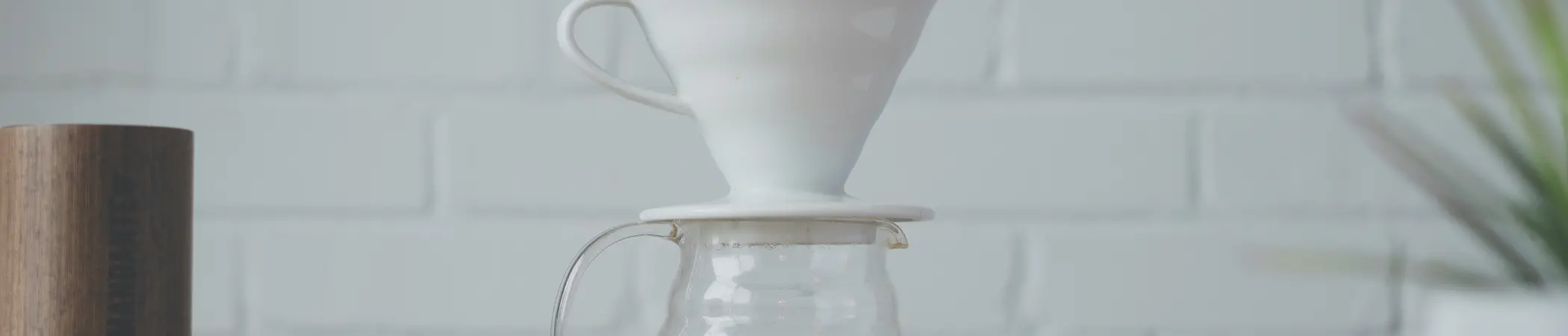
When discussing specialty coffee brewing, we usually focus on grinders, recipes, or filters. However, the material of your dripper also plays an important role in extraction consistency.
The short answer is simple: plastic performs best.
Plastic drippers absorb less heat from the brewing water, maintain a more stable brewing temperature, and deliver more consistent extractions.
While this may disappoint those who prefer ceramic or glass for aesthetic or environmental reasons, from a technical perspective plastic remains the most efficient material.
The thermal behavior of a coffee dripper depends on three key physical properties:
Understanding these concepts explains why two identical brewing recipes can produce different results simply because the drippers are made from different materials.
Thermal conductivity describes how quickly a material absorbs and transfers heat.
Plastic is an excellent thermal insulator, while stainless steel is an excellent heat conductor. Glass and porcelain fall somewhere in between.
| Material | Thermal Conductivity (W/m·K) |
|---|---|
| Acrylic (Plastic) | 0.2 |
| Glass | 1 |
| Porcelain | 4–5 |
| Stainless Steel | 16 |
Porcelain transfers heat roughly 20–25 times faster than acrylic.
As a result, a ceramic dripper removes heat from the brewing water much more quickly during the early stages of extraction.
Specific heat capacity measures how much energy is required to increase the temperature of a material.
| Material | Specific Heat Capacity (J/kg·°C) |
|---|---|
| Acrylic | 1250 |
| Glass | 753 |
| Porcelain | 1085 |
| Stainless Steel | 490 |
Although plastic requires more energy per kilogram to warm up, ceramic drippers are typically much heavier.
In real-world use, a ceramic dripper may absorb approximately 3.5 times more heat than an equivalent plastic model.
This explains one of the most common misconceptions in coffee brewing.
Many coffee enthusiasts prefer ceramic because it "retains heat better."
In reality, that simply means it first absorbs significantly more heat from the brewing water, lowering extraction temperature.
Once heated, the dripper begins losing energy mainly through:
Materials with high thermal conductivity move heat rapidly toward their surface, where it is released into the surrounding air.
Plastic, thanks to its low conductivity and relatively high heat capacity, releases heat much more slowly, reducing thermal losses throughout brewing.
When it comes to thermal radiation, plastic, glass, and porcelain perform similarly at equal temperatures.
Stainless steel radiates less heat but heats up and cools down much faster because of its high conductivity.
Overall, radiative heat loss is roughly half as significant as heat lost through convection.
Air is an outstanding thermal insulator, with a conductivity of only 0.02 W/m·K.
For this reason, some manufacturers produce double-wall drippers with an insulating air gap.
Metal mesh drippers use a similar concept by minimizing direct contact between the paper filter and the metal walls.
However, even double-wall glass drippers must first absorb a considerable amount of heat before the insulating air layer becomes effective.
An equivalent plastic dripper still performs better from the very beginning of the brew.
Metal mesh drippers also have a relatively large surface area exposed to the air, resulting in substantial heat loss through both contact and evaporation.
In fact, evaporation from the paper filter accounts for a significant portion of total thermal loss during brewing.
From a purely engineering perspective, expanded polystyrene (foam) would provide even better insulation—while also being considerably less expensive.
If your goal is maximum brewing consistency, plastic remains the best material for a coffee dripper.
Its advantages are straightforward:
Although dripper design—including wall thickness, weight, and exposed surface area—also affects temperature stability, plastic consistently provides the most balanced thermal performance for producing repeatable, high-quality filter coffee.
Learn how coffee capsule machines work, what is inside a coffee capsule, how capsule coffee is preserved, and how pressure and extraction affect the final cup.
Is your espresso running too fast or choking? Stop wasting beans and learn how to dial in your professional grinder with Blue Faro.
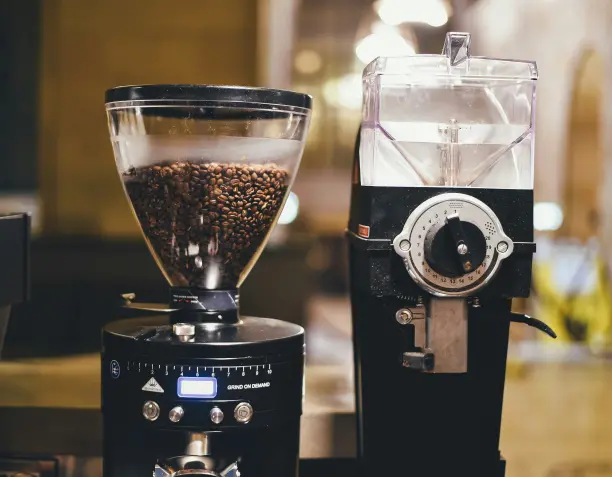
Explore how coffee grinder types (burr vs. blade) and grind size consistency impact flavor. Find the perfect setting for Espresso, Pour-over, and French Press.