
Do you know if your coffee is properly roasted? Discover the difference between roast color and bean development to avoid grassy flavors.
Previous post
Coffee Roasting: How Flavor and Aroma Are Created
Date
Talking about coffee roasting may seem simple, but the language used to describe roast profiles is often confusing.
Terms such as light roast, dark roast, developed, underdeveloped, baked, and stalled can have different meanings depending on the roaster and the context.
To better understand a roasted coffee, it is useful to separate three main concepts:
Together, these factors provide a clearer way to describe how a coffee was roasted and how it may taste in the cup.
Color is the most visible characteristic of roasted coffee, but it is also one of the most misunderstood.
Generally, the final roast temperature influences the color of the beans.
However, color alone does not determine quality. A dark coffee is not automatically better developed, and a light coffee is not necessarily underdeveloped.
Light roasts use lower final temperatures and tend to preserve more of the coffee's natural acids and aromatic compounds.
Typical characteristics include:
Light roasts are often associated with less body or sweetness, but a properly developed light roast can be extremely sweet, balanced, and complex.
The issue is not the roast level itself—it is whether the coffee has been developed correctly.
Dark roasting requires higher temperatures and encourages stronger caramelization and pyrolysis reactions.
This reduces acidity and creates deeper flavors.
A well-executed dark roast may offer notes of:
However, excessive roasting can create:
Dark roasting is not inherently negative. The challenge is maintaining balance and avoiding the loss of the coffee's original character.
Medium roasts sit between light and dark profiles.
They are popular in specialty coffee because they can provide a balance of:
Many roasters use medium profiles for versatile coffees designed for both espresso and filter brewing.
One of the biggest misconceptions in coffee is that darker coffee is always more developed.
This is incorrect.
Development refers to how heat transforms the inside of the bean, not simply how dark the outside appears.
A properly developed coffee should:
A light roast can be fully developed, while a dark roast can still have internal development problems.
Underdevelopment occurs when the coffee does not receive enough heat or time during important roasting stages.
Common characteristics include:
Signs of underdevelopment include:
A darker roast may hide some of these problems, but it does not fix them.
A baked roast occurs when the coffee receives insufficient energy over an extended period, especially after first crack.
The result can be:
The coffee may have the correct color but still taste lifeless.
A stalled roast happens when the temperature stops rising for too long during the roast.
Possible results include:
Unlike color differences, roast stalls are often easier to detect in the cup than by looking at the beans.
Using clear terminology helps communicate roast characteristics:
Light and well-developed coffee
→ Bright, sweet, complex, and expressive.
Dark and well-developed coffee
→ Full-bodied, intense, and lower in acidity.
Light and underdeveloped coffee
→ Green, dry, sharp, and lacking sweetness.
Dark and underdeveloped coffee
→ Bitter, roasty, and lacking complexity.
Medium roast with insufficient development
→ Balanced at first but missing depth.
There is no single perfect roast profile.
Every coffee origin, variety, and brewing method requires a different approach.
The best results come from communication between roasters and baristas: understanding the goals of the roast, the brewing method, and the characteristics that should be highlighted.
A clear roasting vocabulary helps the coffee industry communicate better and create better experiences in the cup.
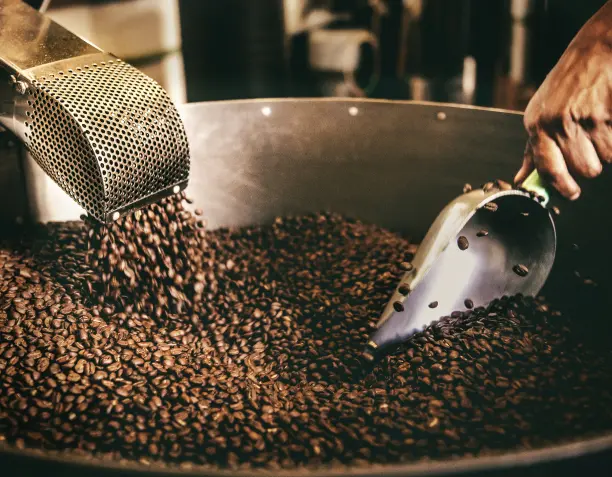
Do you know if your coffee is properly roasted? Discover the difference between roast color and bean development to avoid grassy flavors.
Looking for a bright, fruity cup? Learn how to control coffee acidity during the roast using RoR, temperature, and the first crack.
Discover how coffee roasting transforms green coffee into flavorful specialty coffee through complex chemical reactions that create aroma and sweetness.