


Learn what uniform coffee extraction means and why it has such a big impact on flavor. Discover how even extraction improves sweetness, clarity, and balance.
Previous post
How to Choose the Perfect Coffee Beans: A Complete Guide
Date
One of the most common questions among coffee drinkers is:
Why do coffee descriptions mention fruits, flowers, chocolate, or desserts if none of those ingredients are actually added to the coffee?
The answer is simple: specialty coffee does not need flavorings or additives to develop these characteristics. The flavors and aromas occur naturally during the growth, processing, and roasting of the coffee.
Although we usually think of coffee as a beverage, it begins as a fruit. Coffee beans grow inside a sweet, juicy cherry that develops its own unique flavor compounds as it matures.
Just like a pineapple, apple, or tomato has its own flavor profile, every coffee develops distinctive characteristics influenced by factors such as:
Coffee beans contain a complex combination of compounds that contribute to flavor and aroma.
The main components include:
Carbohydrates and organic acids play a major role in creating flavor, while lipids contribute significantly to aroma and mouthfeel.
When coffee is grown under favorable conditions and roasted properly, these compounds can produce an impressive range of sensory experiences.
During the development of the coffee cherry and throughout the roasting process, hundreds of aromatic compounds are formed.
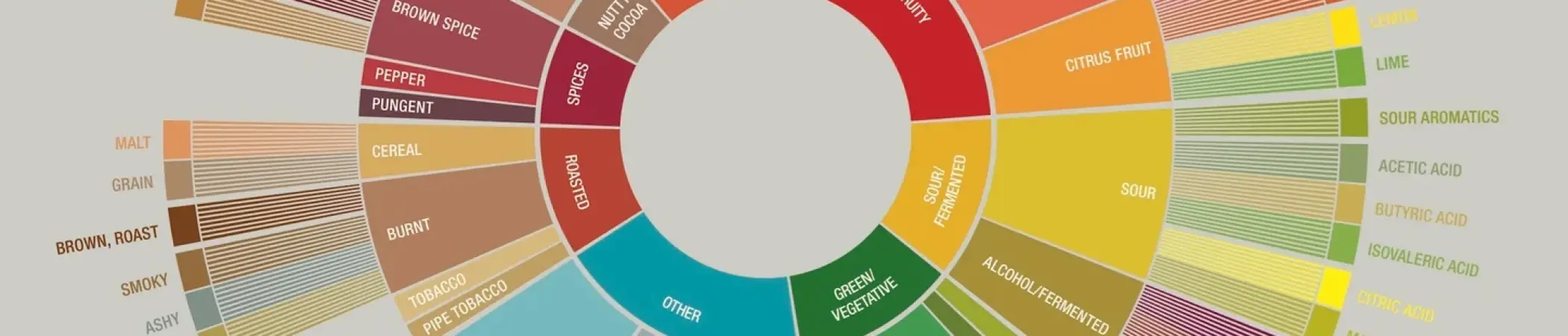
These compounds can create flavor associations with familiar foods, including:
Vegetal notes can also appear. However, dominant green or grassy flavors often indicate roasting or processing defects.
Coffee professionals use descriptors to communicate flavor and aroma in a simple and understandable way.
A descriptor is a sensory reference used to describe what is perceived in the cup.
For example, when a coffee taster identifies notes of:
These are descriptors used to communicate the tasting experience.
One of the most important things to understand is that descriptors are not ingredients.
If a coffee has orange notes, it does not mean oranges were added during processing or roasting.
Instead, it means that the coffee contains aromatic compounds that create a sensory experience similar to what we associate with oranges.
Descriptors are simply a language used to describe flavor.
Coffee is widely considered one of the most complex foods and beverages in terms of flavor and aroma composition.
With hundreds of aromatic compounds interacting in every cup, coffee can offer an extraordinary range of sensory experiences.
This complexity is one of the reasons specialty coffee is so fascinating: every origin, variety, and processing method can create a completely unique flavor profile.

Learn what uniform coffee extraction means and why it has such a big impact on flavor. Discover how even extraction improves sweetness, clarity, and balance.

Learn what coffee body is, where it comes from, and how variety, processing, roasting, brewing, and filtration affect the texture and mouthfeel of coffee.

Learn what coffee blooming is, why CO₂ is released after roasting, and how to adjust bloom time and water for better pour over extraction.