

Learn the meaning of key coffee tasting terms, including aroma, acidity, body, balance, complexity, flavor, and aftertaste.
Previous post
How to Describe Coffee Flavor: Aroma, Acidity, Body & More | Blue Faro

Date
Coffee certifications are becoming increasingly common on the bags and packages we see in shops and cafés. Fair Trade, Organic, Rainforest Alliance, Bird Friendly, UTZ… But what do these labels actually mean? Do they guarantee coffee quality, better flavor, fair working conditions, or environmentally responsible production?
Understanding these differences is particularly important in the world of specialty coffee, where sustainability, traceability, quality, and responsible sourcing have become increasingly important.
In this article, we look at some of the best-known coffee certifications and labels and explain what information they really provide to consumers.
Coffee is a complex agricultural product. Its quality depends on many factors: variety, origin, altitude, climate, cultivation, harvesting, processing, storage, roasting, and brewing.
However, there is no single universal system that allows consumers to determine simply by looking at a coffee bag whether one coffee is “better” than another.
Certifications provide information about specific aspects of coffee production. Some focus on the social and economic conditions of farmers, others on environmental practices, while others recognize exceptional coffee quality.
This distinction is important: a certification can tell you a great deal about how a coffee was produced while telling you very little about how it will taste.
Fair Trade is probably one of the best-known coffee certifications among consumers.
Its main purpose is to improve trading conditions for producers and workers by establishing social, economic, and environmental requirements.
One of its best-known elements is its system of minimum prices and premiums, designed to provide greater economic stability for producers when international coffee prices fluctuate.
The standards also address issues such as forced labor, child labor, working conditions, and certain agricultural practices.
It is important to remember that Fair Trade is not a flavor or quality certification.
A Fair Trade coffee can be excellent, average, or simply ordinary from a sensory perspective. The certification primarily concerns the conditions under which the coffee was produced and traded, not its score in a coffee tasting.
The Organic certification indicates that coffee has been produced according to the organic farming standards applicable in the relevant market.
In general, these standards restrict the use of certain synthetic pesticides, fertilizers, and other agricultural inputs and establish specific requirements for farm management.
However, “organic” does not automatically mean “better tasting.”
Coffee flavor depends on many other factors, and organic coffee can have the same sensory diversity as any other coffee: floral, fruity, sweet, spicy, chocolatey, and much more.
Nor should organic certification automatically be interpreted as a guarantee that the coffee is healthier for the consumer. The certification primarily concerns the agricultural production system.
Many small farmers may also use very few synthetic inputs because of economic, geographical, or traditional reasons without having an official organic certification.
Rainforest Alliance is a certification focused primarily on sustainable agriculture, ecosystem protection, and social conditions.
Its standards include requirements related to biodiversity conservation, soil and water management, agricultural practices, and working conditions.
The goal is to promote production systems that reduce environmental impact while improving conditions for farming communities.
Like Fair Trade and Organic, Rainforest Alliance is not a sensory quality certification.
A coffee carrying this label will not necessarily taste better than one without it. The label provides information about specific sustainability and responsible-production criteria.
This is where things become different.
Cup of Excellence is not a certification for farming practices or labor conditions. It is a competition and recognition program focused directly on high-quality coffee.
Participating lots are evaluated through professional cupping, and the best coffees from participating producing countries receive awards and may be sold through specialized auctions.
For specialty coffee consumers, this distinction has a different meaning from Fair Trade or Organic certification: it is directly related to cup quality.
Cup of Excellence coffees can command very high prices because they represent exceptional and often highly limited lots.
The Bird Friendly Coffee program, developed by the Smithsonian Migratory Bird Center, combines organic farming criteria with additional requirements designed to protect bird habitats.
The program promotes shade-grown coffee and the conservation of complex vegetation that can provide shelter and food for wildlife.
The concept is particularly interesting because it connects coffee production directly with the conservation of the ecosystems in which coffee is grown.
Again, the label does not indicate how the coffee will taste. Instead, it describes environmental conditions and production practices.
UTZ was for many years one of the major sustainability certification programs for agricultural products, including coffee.
One of its defining features was traceability, together with criteria related to agricultural practices, farm management, working conditions, and environmental protection.
Today, UTZ is part of Rainforest Alliance, so it should no longer be understood as a separate certification system in the same way it once was.
The term Direct Trade is common in specialty coffee, but it is important to distinguish it from an official certification.
Generally, it describes a sourcing model in which a roaster develops a direct commercial relationship with a farmer or producer organization, reducing intermediaries and creating a closer relationship between the two sides of the supply chain.
However, Direct Trade does not have one universal definition.
When a roaster uses the term, it is worth asking what it actually means in practice.
Does the roaster visit the farms? Do they know the producers personally? What prices are paid? Is there a long-term relationship? How are prices negotiated?
The term itself does not guarantee any of these things.
Shade grown simply means that coffee is cultivated under shade.
Shade can contribute to a more diverse agricultural ecosystem and provide habitat for different plant and animal species.
However, like Direct Trade, the term should not automatically be treated as a universal certification. Its exact meaning depends on the standards or criteria used by the organization making the claim.
Not necessarily.
This is probably the most important distinction for consumers to understand.
Very broadly, these labels can be divided into different categories:
Fair Trade: social and trading conditions.
Organic: organic farming practices.
Rainforest Alliance: environmental and social sustainability.
Bird Friendly: habitat and biodiversity conservation.
Cup of Excellence: recognition of sensory quality.
Direct Trade: a sourcing or trading model, not a universal certification.
Shade Grown: a cultivation practice or condition, not necessarily a certification.
A coffee can therefore have several certifications, or none at all.
And a coffee without certification can still be exceptional.
Obtaining certification involves costs, audits, documentation, and administrative requirements.
For a small producer, especially one working with small lots of high-quality coffee, obtaining certification may not be economically viable even when their farming practices are responsible.
This is particularly relevant in specialty coffee, where relationships between farmers, exporters, and roasters can provide much more detailed information about a coffee's origin and production.
For this reason, besides looking at certification logos, it is worth paying attention to other information on the coffee bag: country of origin, region, farm or cooperative, variety, processing method, altitude, harvest, and traceability.
A common mistake is to treat these concepts as interchangeable.
They are not.
A certification can verify specific social or environmental criteria. Traceability tells us where the coffee came from and how it moved through the supply chain. Sensory quality, on the other hand, is evaluated through cupping and the characteristics of the brewed coffee.
A coffee can be:
certified but unremarkable from a sensory perspective;
exceptional in the cup but uncertified;
both sustainable and exceptionally high quality;
or covered by several different certifications.
No single logo can summarize the full complexity of a coffee.
Certifications can be useful, but they should not be your only criterion.
If you are looking for specialty coffee, pay attention to the information about the origin and the work of the roaster as well.
Do you know which country the coffee comes from? Is the region or farm identified? Is the variety and processing method stated? Is harvest information available? Do you know when the coffee was roasted?
And most importantly, do you actually like the coffee?
Labels can help you understand how a coffee was produced, but they cannot replace the cup.
There are millions of individual preferences in coffee, and we do not necessarily need a single standard to determine which coffee is “the best.” The diversity of origins, varieties, processing methods, and sensory profiles is precisely what makes coffee so fascinating.
Look at the certifications, understand what they mean, and then taste the coffee. The cup remains the best way to discover what you truly enjoy.
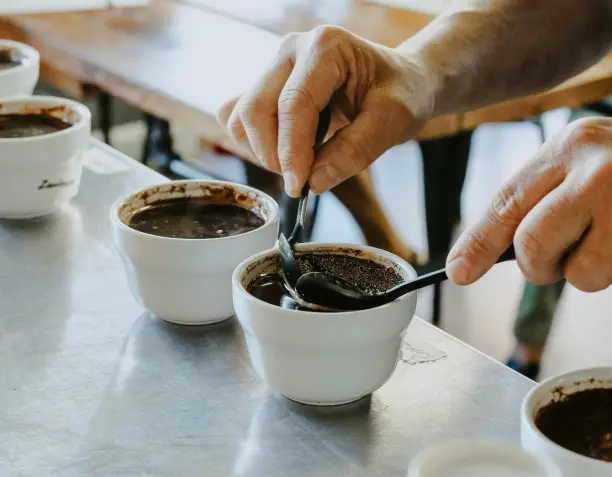
Learn the meaning of key coffee tasting terms, including aroma, acidity, body, balance, complexity, flavor, and aftertaste.
What is a coffee blend and why do roasters combine different coffees? Learn how blends are created, their advantages and the role of coffee extractivity.
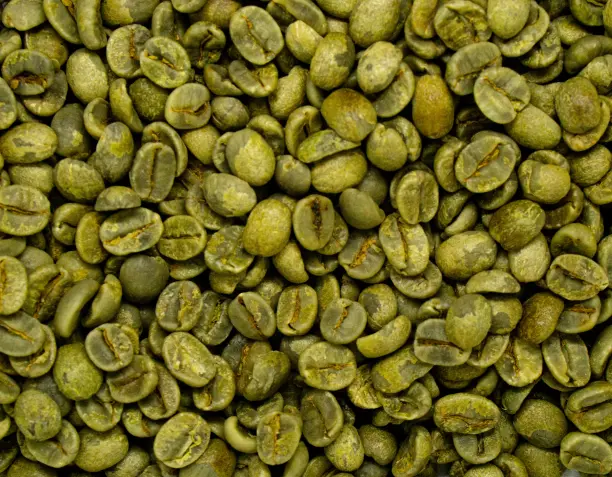
Learn about green coffee beans, from coffee cherry structure and bean size to peaberry, defects, altitude and coffee classification systems.