


Learn how to make smooth, refreshing cold brew coffee in a French press with this easy step-by-step guide, including the ideal coffee-to-water ratio.
Previous post
Espresso: Complete Guide to Extraction, Grinding and Brewing
Date
The moka pot is one of the most recognisable coffee brewing methods in the world. There is probably one in many homes, even if it has been sitting unused in a kitchen cupboard for years.
Its popularity is particularly connected to Italy, where the moka became an essential part of home coffee culture during the twentieth century.
The modern moka pot was patented in 1933 by Italian inventor Alfonso Bialetti, who began producing the famous Moka Express. However, the underlying brewing principle predates Bialetti's design and is based on using pressure generated by heated water to move water through ground coffee.
Traditional moka pots are mostly made from aluminium, although stainless-steel and other versions are now widely available.
The moka occupies a unique position among coffee brewing methods. It does not work exactly like a filter brewer, but it also does not operate under the same conditions as an espresso machine.
As water in the lower chamber heats up, pressure forces it through the coffee bed and into the upper chamber. The result is a strong, concentrated and full-bodied coffee.
However, moka pot coffee has a reputation for being excessively bitter. This is not inevitable. Excessive heat, an unsuitable grind, too much resistance or leaving the brewer on the heat for too long can all contribute to an unbalanced cup.
With a few simple adjustments, it is possible to produce a much cleaner, sweeter and more balanced coffee.
The size of the moka pot largely determines how much coffee and water you can use.
As a general reference, a ratio of around 200 g of coffee per litre of water is approximately 1:5.
However, most moka pots are designed around a specific coffee dose and water capacity. Unlike pourover brewing, you generally should not freely change the coffee-to-water ratio.
Fill the lower chamber with water up to just below the safety valve and fill the filter basket with ground coffee without compacting it.
The exact amount depends on the size of your moka pot.
Moka pot coffee generally works well with a fine-medium grind, finer than a typical pourover grind but usually somewhat coarser than espresso.
As a visual reference, it can resemble the texture of fine salt.
Avoid an extremely fine espresso-style grind. Grinding too fine can increase resistance within the coffee bed and contribute to an unbalanced extraction.
On the other hand, a grind that is too coarse can produce a weak and underdeveloped cup.
The ideal grind should ultimately be adjusted according to the coffee, grinder and flavour in the cup.
A moka pot can be used with almost any coffee, but roast level and origin will have a significant influence on the final result.
Medium and medium-light roasted coffees can produce particularly interesting results, with greater sweetness and more defined fruity or floral characteristics.
Very dark roasts can also be used, but their higher level of roast development can emphasise bitter, smoky and heavily roasted flavours.
If you want a more balanced and clearly defined cup, a medium or medium-light roast is a useful starting point.
There is no need to choose coffees specifically from low-altitude regions. Growing altitude influences green coffee characteristics, but it does not determine on its own whether a coffee will work well in a moka pot.
Moka pot
Specialty coffee
Water
Coffee grinder
Scale
Kettle
Heat source
Weigh the appropriate amount of coffee for your moka pot and grind it immediately before brewing.
Use a fine-medium grind, slightly coarser than espresso.
There is no need to tamp the coffee.
Heat fresh water suitable for coffee brewing.
To reduce the amount of time the coffee spends exposed to heat, we recommend starting with hot water in the lower chamber.
Fill the base to just below the safety valve.
The valve is a safety feature designed to release pressure if it reaches excessive levels.
Place the filter basket into the base of the moka pot and fill it with ground coffee.
Distribute the coffee evenly, but do not press or tamp it as you would in an espresso portafilter.
Remove any loose grounds from the rim to ensure a proper seal.
Check that the rubber gasket is clean and correctly positioned.
Assemble the different parts and close the moka pot firmly without excessive force.
A worn gasket or incorrect assembly can result in water or steam leakage.
Place the moka pot over low to medium heat.
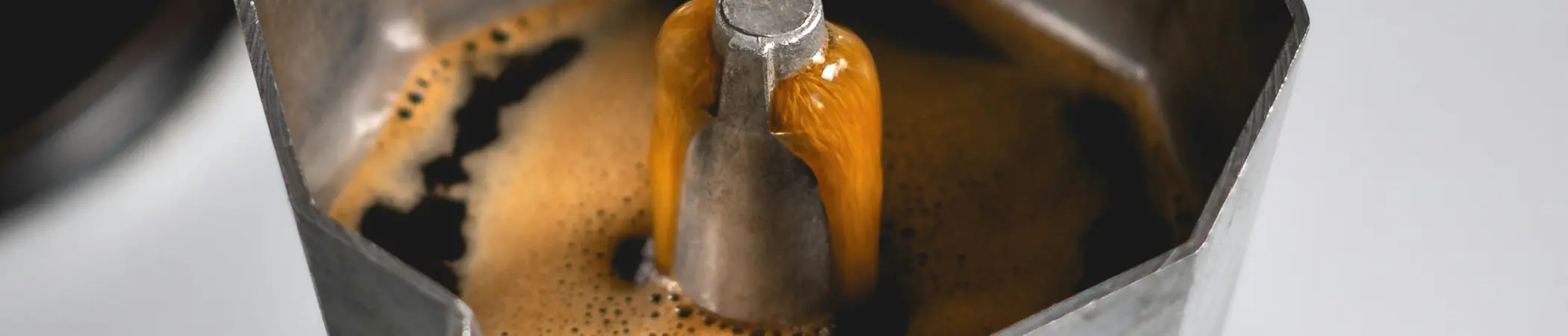
You can leave the lid open so that you can observe the coffee as it flows.
As the water in the lower chamber heats up, pressure increases and forces the water through the coffee bed into the upper chamber.
The goal is to achieve a relatively steady flow rather than an aggressive, turbulent extraction.
Coffee should begin flowing gradually through the central column.
When the flow becomes very fast, irregular or starts producing a significant amount of bubbling and steam, remove the moka pot from the heat.
You do not need to wait until the upper chamber is completely full.
A useful strategy is to remove the moka pot from the heat before the flow turns into a strong stream of steam and bubbling liquid.
You can quickly cool the base of the moka pot by placing it on a damp cloth or another suitable cool surface.
This helps stop the extraction and prevents residual heat from continuing to heat the coffee.
Be careful when handling the moka pot, as all components will be hot.
Gently stir the coffee in the upper chamber before serving to make the beverage more uniform.
Serve immediately and enjoy.
If your moka pot coffee tastes too bitter, there are several factors to review.
Reduce the heat. Excessive heat can accelerate the brewing process and contribute to an unbalanced extraction.
Do not leave the moka pot on the heat for too long. Remove it when the flow starts becoming lighter and more bubbly.
Check the grind. An excessively fine grind can increase resistance and interfere with normal water flow.
Do not tamp the coffee. A moka pot does not work like an espresso machine and does not need a compressed coffee puck.
Choose an appropriate coffee. Very dark roasts can emphasise bitter and heavily roasted flavours.
Start with hot water. Reducing the time the moka pot needs to reach brewing temperature can help limit the coffee's exposure to heat.
In an espresso machine, coffee is distributed and tamped to create a uniform coffee bed designed to withstand high-pressure water flow.
A moka pot works differently.
Water rises through the coffee because of the pressure generated by heating the lower chamber. Excessively compacting the coffee increases resistance and can interfere with normal operation.
Simply fill the basket and distribute the coffee evenly.
No.
Although moka coffee can be intense and concentrated, a moka pot does not operate under the same conditions as an espresso machine.
Espresso is normally brewed at much higher pressure and with an extraction system specifically designed to produce a small, concentrated beverage.
A moka pot produces a different style of coffee: intense, full-bodied and distinctive, but technically it is not espresso.
A well-maintained moka pot can last for many years.
After each use, disassemble the brewer and rinse the components with water. Allow them to dry completely before reassembling.
Pay particular attention to:
The rubber gasket.
The filter.
The safety valve.
Coffee residue inside the different components.
If the gasket becomes worn, loses its elasticity or allows water or steam to escape, it should be replaced.
For aluminium moka pots, avoid excessively aggressive cleaning methods that could damage the surface.
The moka pot has an unfair reputation for producing nothing but strong and bitter coffee.
In reality, small changes to the recipe — particularly grind size, temperature, heat intensity and when you remove the brewer from the heat — can significantly change the result.
There is no single correct recipe for every coffee. Start with a fine-medium grind, hot water and moderate heat, observe the flow and adjust one variable at a time.
Used properly, a moka pot can produce an intense, aromatic and full-bodied cup that reveals a completely different expression of the same coffee compared with other brewing methods.
Learn how to make smooth, refreshing cold brew coffee in a French press with this easy step-by-step guide, including the ideal coffee-to-water ratio.
Learn how to brew better pour over coffee by mastering the seven variables that influence extraction, flavor, sweetness, and balance.
Learn how to make espresso at home, including grind size, ratio, extraction time, temperature, pressure, tamping and recipe adjustments.