
Learn how to make smooth, refreshing cold brew coffee in a French press with this easy step-by-step guide, including the ideal coffee-to-water ratio.
Previous post
How to Make AeroPress Coffee: Guide, Grind Size and Recipe
Date
Over the last few decades, the idea that espresso is the “correct” way to make coffee has become widespread. But no brewing method is inherently superior to another.
Espresso simply produces a very distinctive beverage: small in volume, highly concentrated, intense in texture and extracted under pressure. Filter coffee, pourover, French press and other methods produce completely different styles of coffee.
Espresso is also one of the most popular ways to drink coffee, both in cafés and at home. However, preparing it is considerably more demanding than many filter methods.
Buying an espresso machine can be a great choice if you enjoy experimenting with coffee and want to turn brewing into a hobby. But if you simply want good coffee at the push of a button, a filter coffee maker is likely to be much easier.
A good espresso requires precise grinding, even distribution, controlled dose, ratio, timing, temperature and equipment maintenance. The reward is an exceptionally concentrated beverage capable of expressing a remarkable range of flavors in just a few milliliters.
One of the main problems that led to the development of espresso was the need to prepare coffee quickly and in small quantities.
Producing a concentrated beverage requires relatively little water compared with the amount of coffee used. But once coffee is ground finely enough, the coffee bed creates considerable resistance to water flow.
Early espresso machines used different systems to force water through coffee, including steam and other pressure-generating mechanisms.
A major development came with the lever machines developed in Italy during the mid-20th century. The lever mechanism compressed a spring which, when released, pushed water through the coffee at much higher pressure than could be achieved through gravity alone.
This made it possible to use much finer coffee grounds and produce small, concentrated beverages quickly.
Modern espresso machines generally use electric pumps to generate pressure and provide much greater control over the brewing process.
Crema is the layer of foam that forms on top of an espresso.
Its formation is mainly related to the carbon dioxide (CO₂) generated during roasting and retained inside the coffee beans. During extraction, some of this gas dissolves into the water under pressure.
When espresso leaves the portafilter and reaches atmospheric pressure, the CO₂ begins to escape. The gas forms numerous tiny bubbles that remain suspended in the beverage, creating the characteristic crema layer.
The amount of crema depends on several factors, including:
coffee freshness;
roast profile and roast level;
origin and variety;
processing method;
extraction parameters.
Crema was once widely considered a key indicator of espresso quality. It is not.
Crema can provide useful information about the coffee and extraction, but it cannot by itself tell you whether the beans are high quality, the roast is correct or the espresso will taste good.
An excellent espresso can have relatively little crema, while a low-quality coffee can produce a large and persistent crema.
Ultimately, the best way to evaluate espresso is still to taste it.
To make espresso, ground coffee is placed in a metal basket inside a portafilter.
The machine forces hot water through the coffee under pressure. The small holes in the basket allow the brewed coffee to pass through while retaining most of the coffee particles.
Before extraction begins, the coffee should be distributed and leveled properly. The tamping process then creates a more even coffee bed.
When the pump is activated, water penetrates the coffee and extracts soluble compounds.
A good espresso recipe should specify at least:
dose: the amount of ground coffee in grams;
yield: the weight of the brewed espresso;
ratio: the relationship between coffee dose and beverage yield;
extraction time;
water temperature.
For example, a recipe using 18 g of coffee → 36 g of espresso has a 1:2 ratio.
The machine needs to push a specific amount of water through the coffee within a controlled period of time.
Flow rate is related to the resistance created by the coffee bed. Two of the most important variables affecting this resistance are dose and grind size.
A finer grind creates smaller particles and greater resistance to water flow.
A coarser grind allows water to pass through the coffee more easily.
Think of the difference between sand and stones: water encounters much more resistance when passing through a container filled with sand than through one filled with stones.
If water moves too slowly through the coffee, extraction may become excessive or unbalanced. The result can taste bitter, dry or astringent.
If water moves too quickly, extraction may be insufficient, producing a sharp, weak, salty or underdeveloped cup.
A scale allows you to control two of the most important variables: dose and yield.
If you use 18 g of coffee and produce 36 g of espresso, you know exactly what recipe you used. If the espresso changes, you can more easily identify which variable needs adjustment.
This is why weighing coffee is much more useful at home than trying to estimate doses and beverage volume by eye.
The most important rule is simple:
Change one variable at a time.
If a recipe is not working, start by adjusting grind size. If you simultaneously change dose, grind, temperature and ratio, it becomes much harder to understand what caused the change.
Tamping is the process of compressing the ground coffee before extraction.
The main goal is not to compress the coffee as hard as possible, but to create a flat, even surface and remove significant irregularities from the coffee bed.
If the coffee is distributed unevenly, water can find areas of lower resistance and create channeling. Water then moves through some parts of the coffee much faster than others, resulting in uneven extraction.
The exact amount of tamping force is less important than consistency and levelness.
After distributing the coffee, place the tamper perpendicular to the coffee bed and apply even pressure.
Avoid repeatedly tapping the portafilter or making unnecessary movements after tamping, as these can disturb the coffee bed.
To reduce wrist strain:
keep your wrist straight;
keep your elbow roughly above the tamper;
use controlled pressure rather than excessive force;
keep the tamper perpendicular to the coffee bed.
The goal is a flat and even coffee puck.
This recipe is designed as a starting point for two espresso servings, or one double espresso.
Espresso machine
Burr grinder
Freshly roasted coffee
Portafilter and basket
Tamper
Accurate scale
Timer
Coffee-suitable water
Cups
Fill the reservoir with water suitable for coffee brewing.
Turn the machine on and allow it to reach its full operating temperature. The required warm-up time depends on the machine and the manufacturer's instructions.
A properly heated machine provides greater temperature stability during extraction.
Make sure the portafilter basket is completely clean and dry.
Remove any coffee residue from the previous shot. Accumulated coffee particles and oils can negatively affect flavor.
Grind the beans immediately before brewing.
As a starting point, use 18 g of coffee in a basket designed for that dose.
Weigh the coffee accurately.
Place the ground coffee in the basket and distribute it evenly.
The goal is to avoid areas of different density before tamping.
Tamp evenly while keeping the tamper perpendicular to the coffee bed.
There is no need to use extreme force. The important thing is to create a flat, consistent surface.
Place the cup on the scale and tare it.
Run a brief flush of water through the group head if appropriate for your machine.
Insert the portafilter and start the extraction immediately.
As a starting point, use:
18 g coffee → 36 g espresso
with an approximate extraction time of 25–30 seconds.
These values are not universal rules. Your roaster may recommend a different recipe depending on the coffee and roast profile.
Stop the extraction when you reach the target beverage weight.
A few drops may continue to fall after the pump is stopped. Learn how your machine behaves and adjust the stopping point accordingly.
Grind size is probably the most important adjustment tool when dialing in espresso.
Espresso requires a fine grind, considerably finer than the grind used for most filter coffee.
However, grinder dial numbers are not universal. A setting of “5” on one grinder does not necessarily produce the same particle size as “5” on another.
Think about grind size in terms of extraction results rather than numbers alone.
If you reach the target beverage weight too quickly and the coffee tastes sharp, weak or underdeveloped, try a slightly finer grind.
If the espresso takes too long to extract and tastes bitter, dry or astringent, try a slightly coarser grind.
Make small adjustments and taste again.
The espresso brew ratio describes the relationship between the amount of dry coffee used and the weight of the brewed beverage.
A common starting point is:
1:2
For example:
18 g coffee → 36 g espresso
But many different recipes can produce excellent espresso.
A ratio of 1:1.5 would produce:
18 g coffee → 27 g beverage
The result will be more concentrated and will have a different balance between extraction, body and intensity.
A ratio above 1:2, such as 1:2.5, produces a higher beverage yield and generally a lower concentration.
The ideal ratio depends on the coffee, roast profile and sensory result you want.
Temperature affects extraction, but it should not be treated as the only factor responsible for flavor.
As a starting point, a temperature of approximately 94–97 °C can work well for many coffees, although the ideal setting depends on the coffee and machine.
In general, light-roasted coffees may benefit from relatively high temperatures to encourage sufficient extraction.
Darker roasts tend to be more soluble and may work better at somewhat lower temperatures.
If an espresso consistently tastes sharp and underdeveloped, slightly increasing the temperature may help.
If it tastes excessively bitter or harsh, lowering the temperature may be useful.
Before making major temperature adjustments, check the grind size, ratio, dose and machine condition first.
Pressure is another defining characteristic of espresso.
Many machines are designed to operate at around 9 bar during extraction, although different pressure profiles and brewing approaches exist.
There is no need to obsess over hitting one exact number if the machine is functioning correctly.
Pressure interacts with the resistance created by the coffee bed. This means that changing grind size or distribution can significantly change extraction behavior even when the machine maintains a constant nominal pressure.
There is no single correct roast level for espresso.
Espresso was traditionally associated with dark roasts, but excellent espresso can now be made with light, medium and medium-dark roasted coffees.
A light roast can preserve more of the characteristics of the coffee's origin, variety and processing method, although it often requires more careful extraction.
Darker roasts tend to be more soluble and can be easier to extract. They can also produce profiles dominated by chocolate, caramel, nuts, spices and roasted flavors.
The best choice depends on the result you want.
If you want to emphasize sweetness, clarity and origin characteristics, a light or medium roast can be an excellent choice.
If you prefer more body, intensity and chocolate or nutty flavors, a medium-dark roast may work better.
The important thing is balance, regardless of roast level.
Cleaning is an essential part of espresso preparation.
A dirty machine can produce stale, bitter or unpleasant flavors even when the coffee and recipe are excellent.
After every service or brewing session:
clean the basket and portafilter;
remove coffee residue from the group head;
clean the shower screen;
follow the manufacturer's maintenance recommendations;
keep the grinder clean;
use suitable water to reduce scale buildup.
Coffee oils accumulate easily on surfaces that come into contact with coffee. If they are not removed, they can oxidize and negatively affect flavor.
Water makes up most of the final espresso, so its mineral composition has a significant impact on both flavor and machine performance.
Very hard water can promote scale buildup and increase maintenance requirements.
Using water suitable for coffee helps protect the equipment and provides more consistent extraction.
The rubber group gasket wears out over time.
A common sign is that the portafilter needs to rotate too far to lock into place or does not maintain the correct position.
Preventive maintenance is preferable to waiting for a worn component to cause a leak or equipment failure.
Espresso can seem complicated at first because small changes can produce significant differences in the cup.
But that is also what makes it so interesting.
Start with a simple recipe:
18 g coffee → 36 g espresso → approximately 25–30 seconds
Then adjust the grind size and evaluate the result.
If the coffee tastes sharp and underdeveloped, try a finer grind.
If it tastes bitter, dry or astringent, try a coarser grind.
And above all, change one variable at a time.
There is no universal espresso recipe. The goal is not to achieve a perfect number on a timer, but to find the parameters that allow each coffee to taste sweet, balanced and enjoyable.
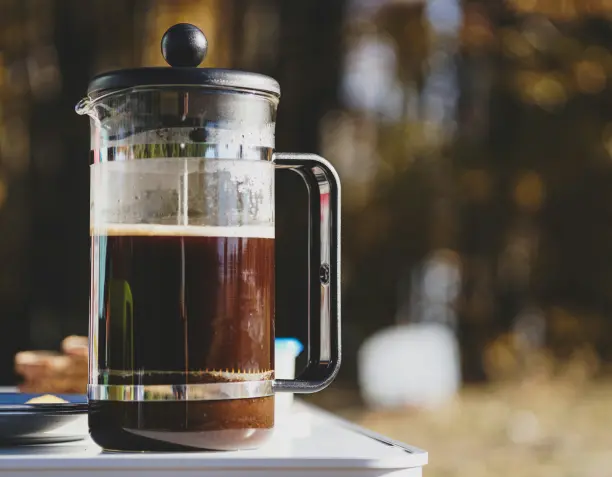
Learn how to make smooth, refreshing cold brew coffee in a French press with this easy step-by-step guide, including the ideal coffee-to-water ratio.
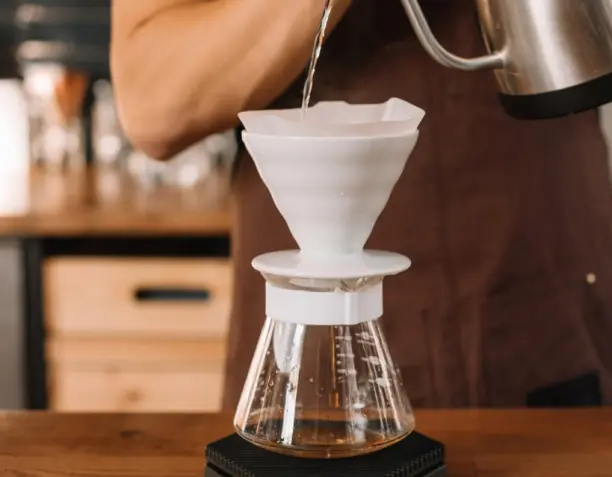
Learn how to brew better pour over coffee by mastering the seven variables that influence extraction, flavor, sweetness, and balance.
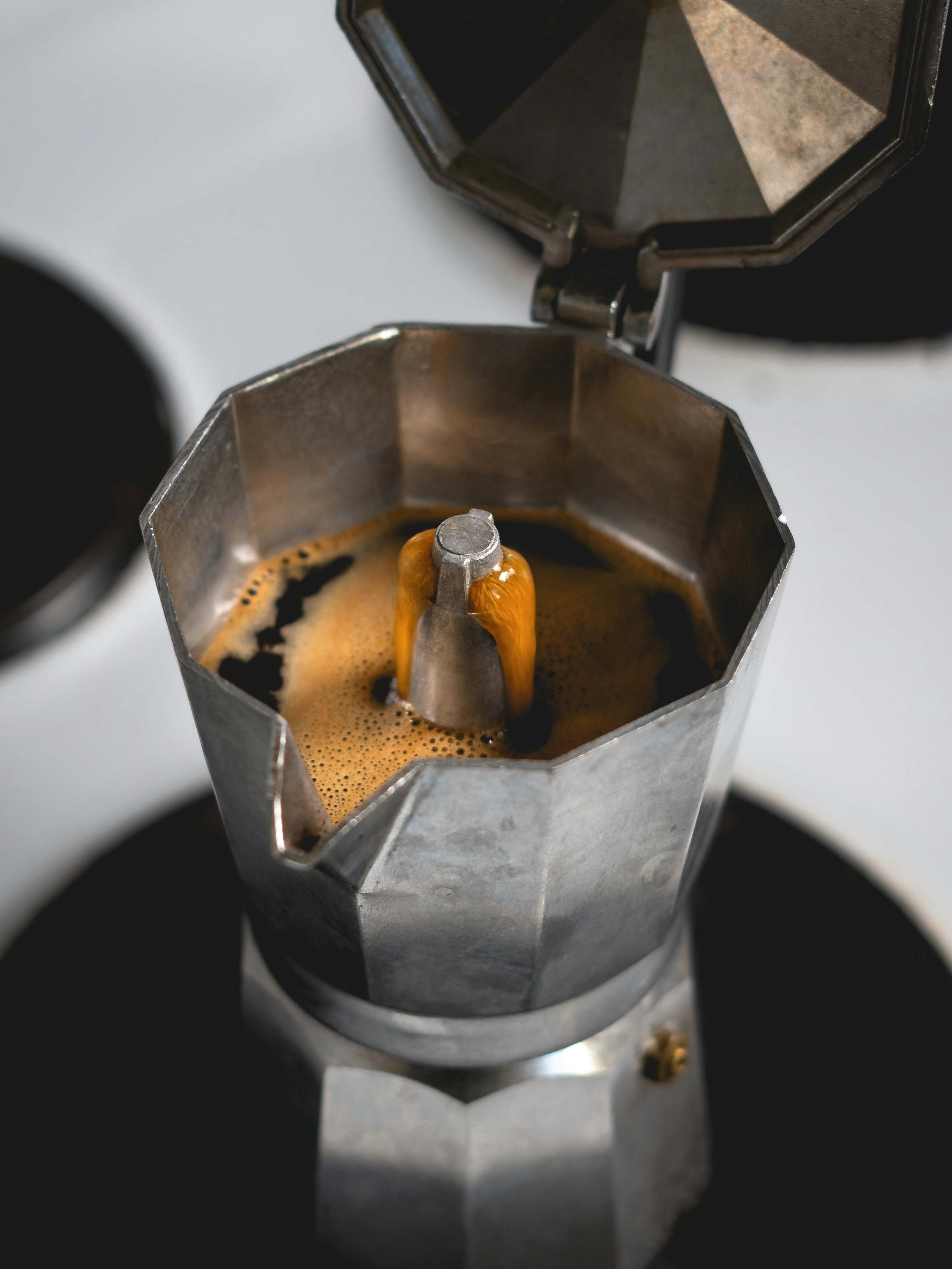
Learn how to make moka pot coffee with the right coffee-to-water ratio, grind size, heat and brewing technique while avoiding excessive bitterness. URL slug: