
Learn about the main green coffee defects, their causes and how they can affect roasting, extraction and the flavor of the final cup.
Previous post
Green Coffee Defects: Types, Causes and Effects on the Cup
Date
Strawberry, peach, red berries, and tropical fruit notes are becoming increasingly common in specialty coffee. However, not all these flavours have the same origin. Some result from the coffee variety, terroir, and growing conditions, while others develop during controlled fermentation processes, such as co-fermentation.
But how can you tell the difference during a coffee cupping session? Is it possible to recognise whether a strawberry or peach note comes from the coffee's natural characteristics or from the addition of fruit and yeast cultures during processing?
In this Blue Faro sensory guide, we'll explain how to train your palate, which characteristics to look for in the cup, and what clues can help you identify different flavour profiles.
Before learning to distinguish flavours, it's important to understand how they develop.
Coffee contains hundreds of aromatic compounds that form during the growth of the coffee plant, cherry processing, roasting, and brewing. The combination of these factors determines the sensory profile of each coffee.
Fruity notes can have several different origins.
Terroir encompasses the environmental conditions in which coffee grows, including altitude, temperature, soil, rainfall, and sun exposure. Together with the botanical variety, these conditions influence the chemical composition of the beans and their sensory characteristics.
For example, some Ethiopian coffees have floral and citrus profiles, while certain Colombian coffees may offer notes of red berries, caramel, or stone fruit.
These characteristics are not exclusive to any particular region or variety. The final profile depends on the interaction between genetics, environment, and processing.
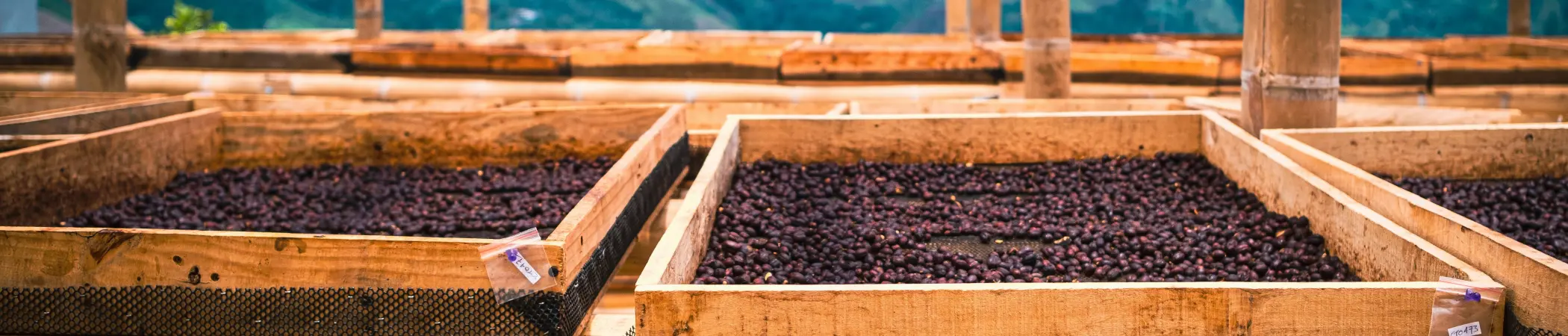
Fermentation is a fundamental stage in developing coffee's flavour profile. During this process, microorganisms naturally present on the coffee cherries and in the surrounding environment transform sugars and other compounds in the pulp and mucilage.
Depending on the fermentation conditions, different aromatic compounds can develop, creating flavours reminiscent of ripe fruit, flowers, spices, or even alcoholic beverages.
Traditional processing methods, such as washed, natural, and honey, can also produce highly expressive fruity profiles without adding fruit or external microbial cultures.
Co-fermentation is a processing technique in which additional ingredients, such as fruit, or selected microorganisms are introduced during coffee fermentation.
For example, some producers use strawberries, passion fruit, or pineapple, while others introduce specific yeast cultures to encourage the development of particular aromas.
These processes can produce distinctive sensory profiles, with intense fruity notes that are sometimes unusual in coffees processed using conventional methods.
However, not all coffees with intense or unusual flavours are co-fermented. Aromatic intensity alone cannot determine the processing method.
Co-fermentation is a processing technique that allows producers to influence the development of a coffee's sensory profile more directly.
Unlike conventional fermentation, in which naturally occurring microorganisms participate in the process, co-fermentation may involve adding fruit, juices, or other ingredients, as well as selected microbial cultures.
For example, a producer may add strawberries during fermentation to encourage the development of certain aromatic compounds. They may also use selected yeast cultures to modify microbial activity and achieve specific flavour profiles.
The result depends on several factors:
Microorganisms: Different yeasts and bacteria produce different metabolites and aromatic compounds.
Fermentation time: The duration of the process influences flavour and aroma development.
Temperature: Temperature affects microbial activity and fermentation speed.
Added ingredients: Fruits and other ingredients can provide aromatic precursors or modify the fermentation environment.
Processing method: Washed, natural, and other processing methods influence how the flavour profile develops and is preserved.
In the cup, these coffees can display pronounced notes of specific fruits, such as strawberry, mango, pineapple, or red berries. They may also develop aromas reminiscent of yoghurt, wine, or fermented beverages.
However, these characteristics are not exclusive to co-fermentation. Some traditionally processed coffees can have similar profiles.
For this reason, sensory evaluation should always be combined with information about the coffee's origin and processing.
During coffee cupping, you can observe certain characteristics that may help you form hypotheses about the origin of specific flavours.
The aim is not to establish absolute rules but to learn to recognise sensory patterns.
One of the first characteristics to observe is aroma intensity.
Co-fermented coffees can have very distinct and intense fruity notes. For example, a coffee may clearly evoke strawberry juice, red berry jam, or passion fruit juice.
In contrast, some traditionally processed coffees have a more integrated fruity expression, combined with other cup characteristics such as acidity, sweetness, and floral notes.
However, traditional natural coffees can also display extraordinary fruit intensity. Therefore, a strong fruity note is not proof of co-fermentation.
What should you look for during cupping?
Does the fruit appear as a delicate aroma or a highly concentrated note?
Does it resemble fresh fruit or a processed product, such as juice or jam?
Is the fruity note integrated with the rest of the profile, or does it completely dominate the cup?
These questions will help you describe the coffee more precisely.
Acidity is another important element when identifying and describing fruity notes.
In many specialty coffees, acidity can evoke citrus fruits, green apples, red berries, or stone fruit.
For example, a coffee with bright acidity and a juicy mouthfeel may remind you of fresh peach or mandarin. In other cases, softer acidity combined with pronounced sweetness may evoke ripe fruit.
Some co-fermented coffees have pronounced acidity and a mouthfeel similar to juice or fermented beverages. Others have a creamier texture and resemble yoghurt or ripe fruit.
However, acidity also depends on the variety, cherry ripeness, processing, and roast.
To train your palate, try distinguishing between three types of acidity:
Citric acidity: Reminiscent of lemon, orange, or mandarin.
Malic acidity: Similar to the acidity found in green apples.
Tartaric acidity: Can evoke grapes and certain stone fruits.
These references do not identify the fermentation method, but they can help you describe the sensory profile more accurately.
One clue worth paying particular attention to is the presence of aromas associated with fermented beverages.
During fermentation, alcohols, esters, and other volatile compounds can develop, contributing to the coffee's aroma.
Some of these compounds can evoke:
Red or white wine.
Cider.
Beer.
Kombucha.
Fermented yoghurt.
These aromas can occur in both co-fermented coffees and coffees processed through conventional fermentation.
The key is to observe how they integrate with the rest of the flavour profile.
For example, a coffee with fresh strawberry and floral notes may offer a very different sensory experience from one combining ripe strawberry, wine-like aromas, and a mouthfeel reminiscent of a fermented beverage.
In the second case, it is worth paying particular attention to fermentation, although the exact processing method cannot be determined through cupping alone.
Another interesting characteristic is how the flavour profile evolves during tasting.
In some coffees, fruity notes initially appear in the aroma, develop on the palate, and gradually disappear during the aftertaste.
In others, a particular note remains for a long time after swallowing.
Co-fermented coffees can have very distinct and persistent profiles, although this also depends on the variety, processing, and roast.
During cupping, pay attention to three stages:
Aroma: Which fruits can you identify before tasting the coffee?
Flavour: Do the fruity notes remain when the coffee reaches your palate?
Aftertaste: Which flavours linger after swallowing?
Observing these three stages will help you build a more complete sensory description.
The best way to develop your sensory skills is to practise with different coffees and compare their profiles.
We suggest a simple exercise you can do at home or during a cupping session.
Choose two coffees with fruity profiles. Ideally, compare one traditionally processed coffee with one co-fermented coffee, provided you know their processing methods.
Use the same coffee-to-water ratio, water temperature, and brewing method for both.
This will help minimise differences caused by brewing variables.
Before adding water, smell the freshly ground coffee.
Try to identify your first aromatic associations without looking at the producer's tasting notes.
After adding water, smell the coffee again. Notice whether new aromas appear and whether their intensity changes.
Taste each coffee once it has cooled to a suitable temperature.
Instead of trying to identify several fruits at once, start with broader categories:
Citrus fruits.
Stone fruits.
Red berries.
Tropical fruits.
Ripe or fermented fruit.
Once you have identified a category, try to name a specific fruit. For example, instead of simply writing "red fruit", you could note "fresh strawberry", "raspberry", or "ripe cherry".
You don't have to be right every time. The important thing is to develop your own sensory vocabulary and learn to recognise differences.
Taste both coffees several times and compare their characteristics.
Ask yourself:
Which has brighter acidity?
Which has more pronounced sweetness?
Is the texture light, silky, or creamy?
Do the fruity notes resemble fresh, ripe, or fermented fruit?
Are there aromas similar to wine, cider, or yoghurt?
Record the differences without immediately attributing them to the processing method.
Once you have finished cupping, look up the information about each coffee.
Check the variety, origin, and processing method. If the producer provides detailed information about fermentation, pay attention to any added ingredients and the microorganisms used.
This final step is particularly important: cupping allows you to develop hypotheses, but the producer's information is necessary to understand the actual process.
When we start exploring experimental fermentation methods, it is easy to confuse certain sensory characteristics with definitive proof of how a coffee was processed.
Here are some common mistakes to avoid.
Assuming that intense fruity notes mean the coffee is co-fermented.
A coffee grown from a suitable variety, under favourable conditions, and carefully processed can have very intense fruity notes. Aromatic intensity alone is not enough to identify co-fermentation.
Confusing fermented flavours with defects.
Wine-like, lactic, or cider-like aromas can be part of the flavour profile intended by the producer. However, poorly controlled fermentation can also produce unpleasant flavours.
It is important to distinguish between an intentional sensory characteristic and a defect. To do this, you need to evaluate the overall balance of the cup.
Believing that all co-fermented coffees taste artificial.
Co-fermentation does not necessarily produce artificial or excessive flavours. The result depends on the ingredients, microorganisms, and processing conditions.
Some co-fermented coffees have delicate and balanced profiles, while others display extremely intense aromas.
Trying to identify the processing method through flavour alone.
Although cupping can help you recognise certain patterns, no single sensory characteristic can confirm that a coffee has been co-fermented.
Two coffees processed differently can have very similar flavour profiles. This is why traceability and processing information are essential.
The choice depends on personal preferences and the sensory experience you are looking for.
Traditionally processed coffees can offer a wide range of profiles, from floral and citrus notes to ripe fruit, chocolate, and caramel.
Co-fermented coffees, on the other hand, allow you to explore experimental profiles and aromas that may be unusual in a cup of coffee.
Neither method guarantees higher quality on its own. The final quality depends on factors such as the raw material, cherry ripeness, fermentation control, roasting, and brewing.
For anyone learning to taste coffee, trying both processing styles can be an excellent opportunity to expand their sensory vocabulary and better understand how flavour develops.
The most interesting part is experimenting, comparing, and discovering which profiles appeal most to your palate.
Coffee cupping is a skill that develops with practice. The more flavour profiles you try, the easier it becomes to recognise the differences between varieties, origins, and processing methods.
You don't need professional equipment or advanced knowledge to get started. All you need is quality coffee, consistent brewing, and curiosity about exploring new flavours.
At Blue Faro, we believe every cup is an opportunity to discover something new.
If you want to start exploring different specialty coffee profiles, discover our Filter Coffee Starter Pack. It's a practical way to try different coffees and train your palate at home.
Discover our Filter Coffee Starter Pack and start your sensory journey with Blue Faro.
Learn about the main green coffee defects, their causes and how they can affect roasting, extraction and the flavor of the final cup.
Discover what Peaberry coffee is, how this natural coffee bean mutation develops, and whether it really tastes better than regular coffee.

How does coffee processing change your cup's flavor? Discover the differences between natural, washed, and honey methods with Blue Faro.