

Learn how to make smooth, refreshing cold brew coffee in a French press with this easy step-by-step guide, including the ideal coffee-to-water ratio.
Previous post
Drip Coffee Maker: How to Brew Better Filter Coffee

Date
Making coffee with a French press, also known as a cafetière or press pot, is one of the simplest and most underrated brewing methods. It requires no electricity, uses a reusable filter and produces a cup with plenty of body and a distinctive texture.
Despite its name, the modern French press did not originate in France. In 1929, Italian designer Attilio Calimani patented a plunger coffee maker that became one of the direct predecessors of the modern French press. Earlier French designs for similar brewers had already existed.
Unlike methods such as pourover, where water passes through a bed of ground coffee, the French press uses immersion brewing: the coffee remains in contact with the water throughout the extraction.
Its metal filter allows more oils and fine coffee particles to pass through than a paper filter. This is why French press coffee tends to have more body, texture and weight in the mouth.
The trade-off is sediment. Very small coffee particles can pass through the metal filter and end up in the cup, particularly when the coffee is ground too finely or the plunger is pressed too aggressively.
The good news is that you can make a French press with considerably less sediment than you might expect. The key is controlling the grind size and brewing time, while avoiding unnecessary agitation once extraction is complete.
As a starting point, we recommend approximately 75 g of coffee per litre of water, equivalent to a ratio of around 1:13.3.
This is not a fixed rule. If you prefer a stronger cup, you can increase the amount of coffee slightly. For a lighter brew, reduce it.
A scale is particularly useful for French press brewing because it allows you to repeat your recipe and make controlled adjustments.
Reference recipe:
30 g coffee
400 ml water
Approximate ratio: 1:13
Total brewing time: about 9 minutes
A coarse grind is traditionally recommended for French press coffee. However, grind size should not be determined by the brewing method alone. It also depends on how the coffee behaves during extraction and on the filtration system.
A grind that is too fine can increase the amount of coffee particles passing through the metal filter, resulting in a muddier or more astringent cup. A grind that is too coarse, on the other hand, can make it harder to achieve sufficient extraction during a relatively short immersion.
As a starting point, use a medium-coarse grind, clearly coarser than an espresso grind.
Consistency is particularly important. A grinder that produces excessive fines can significantly increase sediment and contribute dry or bitter flavours.
French press
Specialty coffee
Water
Coffee grinder
Scale
Kettle
Timer
Spoon
Weigh the required amount of coffee and grind it immediately before brewing.
As a starting point, use 75 g of coffee per litre of water.
For a 400 ml French press, this means approximately 30 g of coffee.
Use fresh water with a composition suitable for brewing coffee.
A temperature of 92–95 °C is a good starting point. There is no need to treat this range as an absolute rule: temperature can be adjusted depending on the coffee, roast level and flavour result.
Before brewing, rinse the French press with hot water to preheat it. This reduces the initial heat loss and helps maintain more stable brewing conditions.
Place the ground coffee in the French press and tare the scale.
Add approximately 100 ml of water and stir gently to make sure all the coffee is evenly saturated.
Then add the remaining water until you reach the total amount specified in your recipe.
Start the timer and allow the coffee to steep for 4 minutes.
During this time, the coffee grounds will rise towards the surface, forming a layer together with foam and gases released during brewing.
At the 4-minute mark, gently break the surface layer with a spoon.
Do this carefully and avoid excessive stirring. The goal is to allow most of the coffee particles to settle towards the bottom of the brewer.
After breaking the crust, wait approximately 5 more minutes.
This additional resting time allows both larger and smaller particles to settle and gives the coffee time to cool to a more comfortable drinking temperature.
After the additional 5 minutes, place the plunger on top of the French press.
There is no need to press it down forcefully. In fact, to minimise sediment, you can lower it very slowly, stopping just above the surface of the coffee.
Excessive pressure can disturb the sediment accumulated at the bottom and cause more particles to remain suspended in the brew.
Your coffee is ready to serve.
Pour slowly and avoid tilting the French press too far towards the end. This helps keep the sediment at the bottom rather than transferring it into your cup.
If you want a cleaner cup, there are several factors you can control:
Use a consistent grind. A quality grinder produces fewer extremely fine particles.
Avoid excessive stirring. Too much agitation keeps fines suspended in the brew.
Let the coffee settle. A few additional minutes after brewing allow particles to sink.
Lower the plunger slowly. You do not need to apply force to make good French press coffee.
Pour carefully. The final portion of the brew generally contains more sediment.
The main difference from pourover brewing comes down to filtration.
Paper filters retain a large proportion of the coffee's oils and fine particles. A French press metal filter allows more of them to pass into the cup.
The result is coffee with more body, texture and weight, although generally less clarity than a paper-filtered brew.
This makes the French press particularly interesting when you want to emphasise a fuller mouthfeel and a more textured expression of the coffee.
French press brewing is highly versatile and can be used with virtually any coffee.
Coffees with chocolate, nutty, caramel or spice notes can work particularly well, but more fruity and floral coffees can also produce excellent results when the recipe is properly adjusted.
As with specialty coffee in general, there is no single correct recipe. Origin, variety, processing method, roast level and coffee freshness all influence how a coffee behaves during extraction.
French press brewing does not need to be complicated.
Start with a 75 g/L ratio, a medium-coarse grind, water at 92–95 °C and an initial 4-minute steep. From there, adjust one variable at a time.
If the coffee tastes too intense or bitter, try reducing extraction slightly or using a somewhat coarser grind. If it tastes weak or underdeveloped, try a slightly finer grind or increase the coffee-to-water ratio.
The goal is not to follow a recipe mechanically, but to understand how each variable changes extraction.
With good coffee, suitable water and a little patience, a French press can produce a complex, aromatic and full-bodied cup.
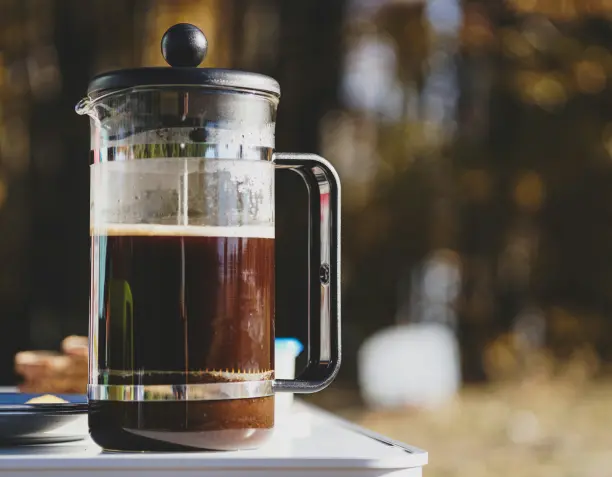
Learn how to make smooth, refreshing cold brew coffee in a French press with this easy step-by-step guide, including the ideal coffee-to-water ratio.
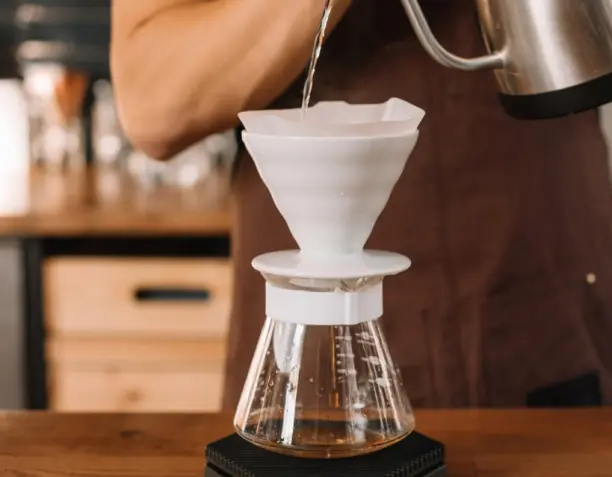
Learn how to brew better pour over coffee by mastering the seven variables that influence extraction, flavor, sweetness, and balance.
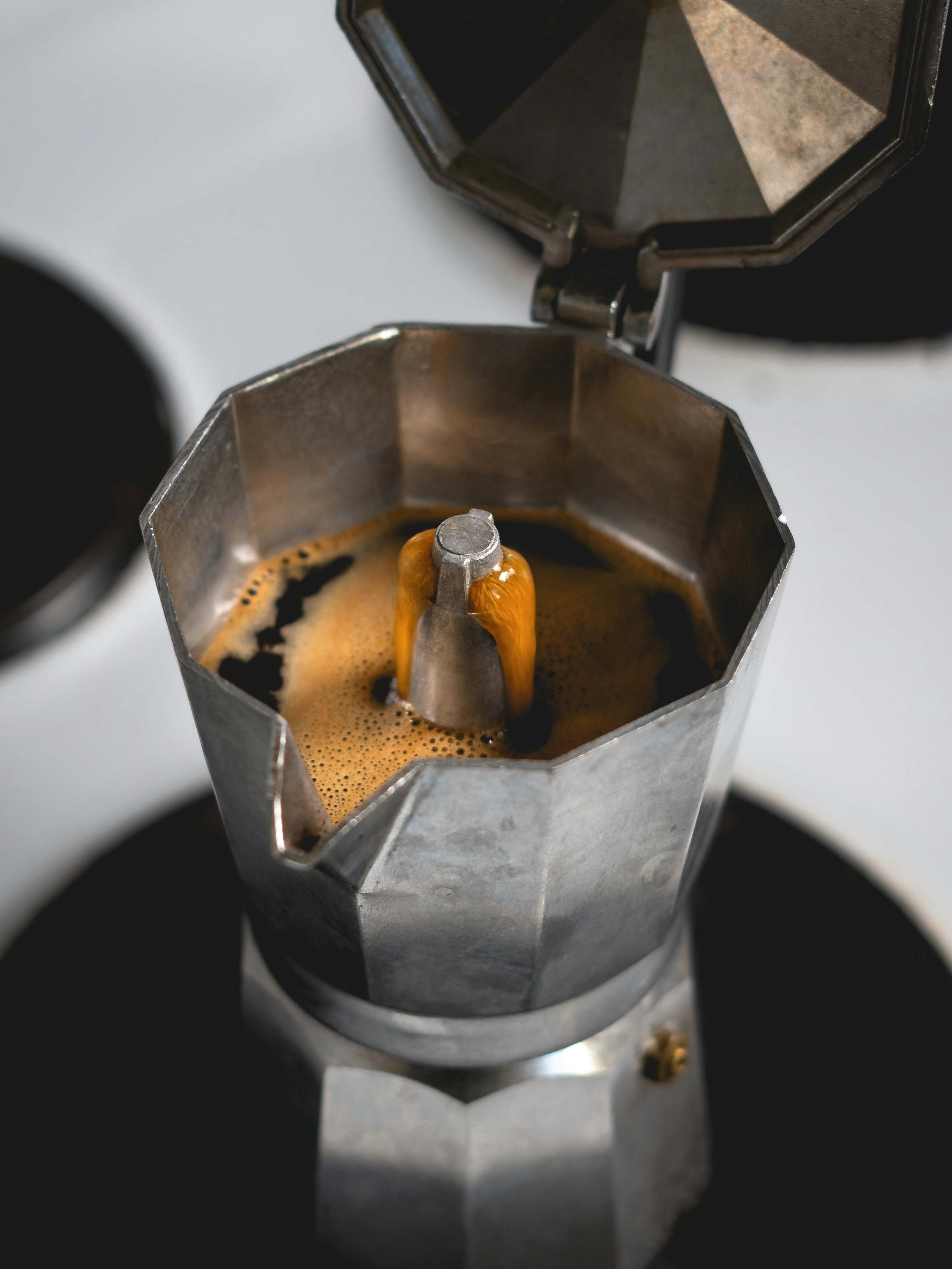
Learn how to make moka pot coffee with the right coffee-to-water ratio, grind size, heat and brewing technique while avoiding excessive bitterness. URL slug: