
Learn how to make smooth, refreshing cold brew coffee in a French press with this easy step-by-step guide, including the ideal coffee-to-water ratio.
Previous post
Pourover Coffee: How to Brew Better Filter Coffee
Date
A drip coffee maker is one of the simplest and most consistent ways to brew filter coffee at home.
Its main advantage is predictability. Unlike a manual pourover method, you do not need to continuously control the flow of water. The machine heats and distributes the water over the coffee grounds for you.
Once you have established the right coffee dose, water volume and grind size, you can repeat the same brewing process with very little effort.
However, not all drip coffee makers produce the same results. Brew quality depends largely on how well the machine controls water temperature, flow rate and water distribution across the coffee bed.
One of the most important characteristics is the machine's ability to maintain an appropriate brewing temperature.
If the water is not hot enough or is distributed unevenly over the coffee, extraction can suffer, resulting in a weak, underdeveloped or unbalanced cup.
When choosing a drip coffee maker, it is worth looking for models that have been evaluated against specialty coffee brewing standards. The Specialty Coffee Association (SCA) has a certification program for home coffee brewers that evaluates, among other factors, brewing-related performance.
If you are not going to drink the coffee immediately, a thermal carafe is generally preferable to a machine that keeps the coffee hot on a heated plate.
Keeping brewed coffee at a high temperature for an extended period can accelerate changes in flavor and may make the coffee taste more bitter or unpleasant.
A thermal carafe helps maintain temperature without continuously heating the brewed coffee directly.
A larger-capacity machine can be convenient when brewing several cups, although capacity alone does not guarantee better coffee. The important factor is how consistently the brewer controls extraction at the volume you are preparing.
As a starting point for a drip coffee maker, use approximately:
60 g of coffee per 1 liter of water
This corresponds to a ratio of approximately 1:16.7.
For smaller batches:
30 g coffee → 500 ml water
60 g coffee → 1 liter water
This ratio is a starting point rather than an absolute rule. Depending on the coffee, brewer and personal preference, you can adjust the amount of coffee or water.
If the coffee tastes too strong, increase the amount of water slightly. If it tastes too weak, reduce the amount of water.
For most drip coffee makers, a medium to medium-fine grind is a good starting point.
The ideal grind also depends on the amount of coffee being brewed and how the machine operates.
As a general reference:
500 ml–1 liter: medium-fine grind.
More than 1 liter: a slightly coarser grind may be useful if the contact time becomes too long.
The most important guide is the flavor in the cup.
If the coffee tastes bitter, dry or astringent and the flow is too slow, try a coarser grind.
If it tastes sharp, weak or underdeveloped and the water passes through the coffee too quickly, try a finer grind.
Drip coffee maker
Freshly roasted coffee
Water
Coffee grinder
Scale
Paper filter
Grind the coffee immediately before brewing.
Measure the required amount according to the volume of water. As a starting point, use 60 g of coffee per liter of water.
Place the paper filter in the filter basket.
You can rinse it with hot water beforehand to remove potential paper flavors and preheat the brewing system. Discard the rinse water.
Place the ground coffee into the filter and distribute it evenly.
Add fresh water, preferably with a mineral composition suitable for coffee brewing.
Use the amount of water specified by your recipe.
Turn on the coffee maker and allow it to complete the brewing cycle.
Observe how the water is distributed over the coffee. If the machine does not wet the coffee bed evenly, check whether the filter basket or showerhead is functioning correctly.
Wait until the machine has completed the entire brewing cycle.
Avoid removing the carafe too early, as some machines are designed to control water flow throughout the brewing process.
Once brewing is complete, remove the filter and spent coffee grounds.
If you are using a thermal carafe, close it immediately to help retain heat.
Before serving, gently swirl the coffee in the carafe. This helps homogenize the brew, especially because the first and last portions of the extraction can have different concentrations.
Serve immediately for the best aroma and flavor.
If your coffee does not taste the way you want, adjust the grind size first before making major changes to the coffee dose.
Grind size directly affects extraction speed and therefore the balance between acidity, sweetness, bitterness and body.
As a general guide:
Too acidic, weak or underdeveloped: try a finer grind.
Too bitter, dry or astringent: try a coarser grind.
Too strong: increase the amount of water slightly.
Too weak: decrease the amount of water slightly.
Keep in mind that brewing time, temperature and the design of the coffee maker also affect the result. There is therefore no single perfect setting for every machine.
One of the greatest advantages of drip brewing is its consistency. Once you find a recipe that works, you can repeat it easily and use it as a starting point for different coffees.
Try different origins, roast profiles and grind sizes and observe how they change the cup.
The goal is not to follow a recipe rigidly, but to find the balance that allows each coffee to express its best characteristics.
Learn how to make smooth, refreshing cold brew coffee in a French press with this easy step-by-step guide, including the ideal coffee-to-water ratio.
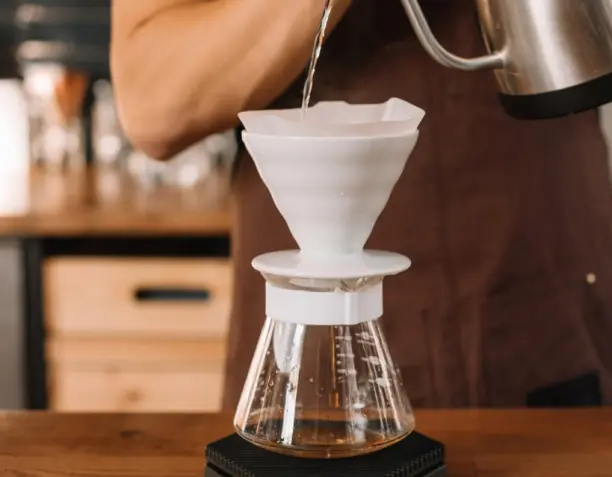
Learn how to brew better pour over coffee by mastering the seven variables that influence extraction, flavor, sweetness, and balance.
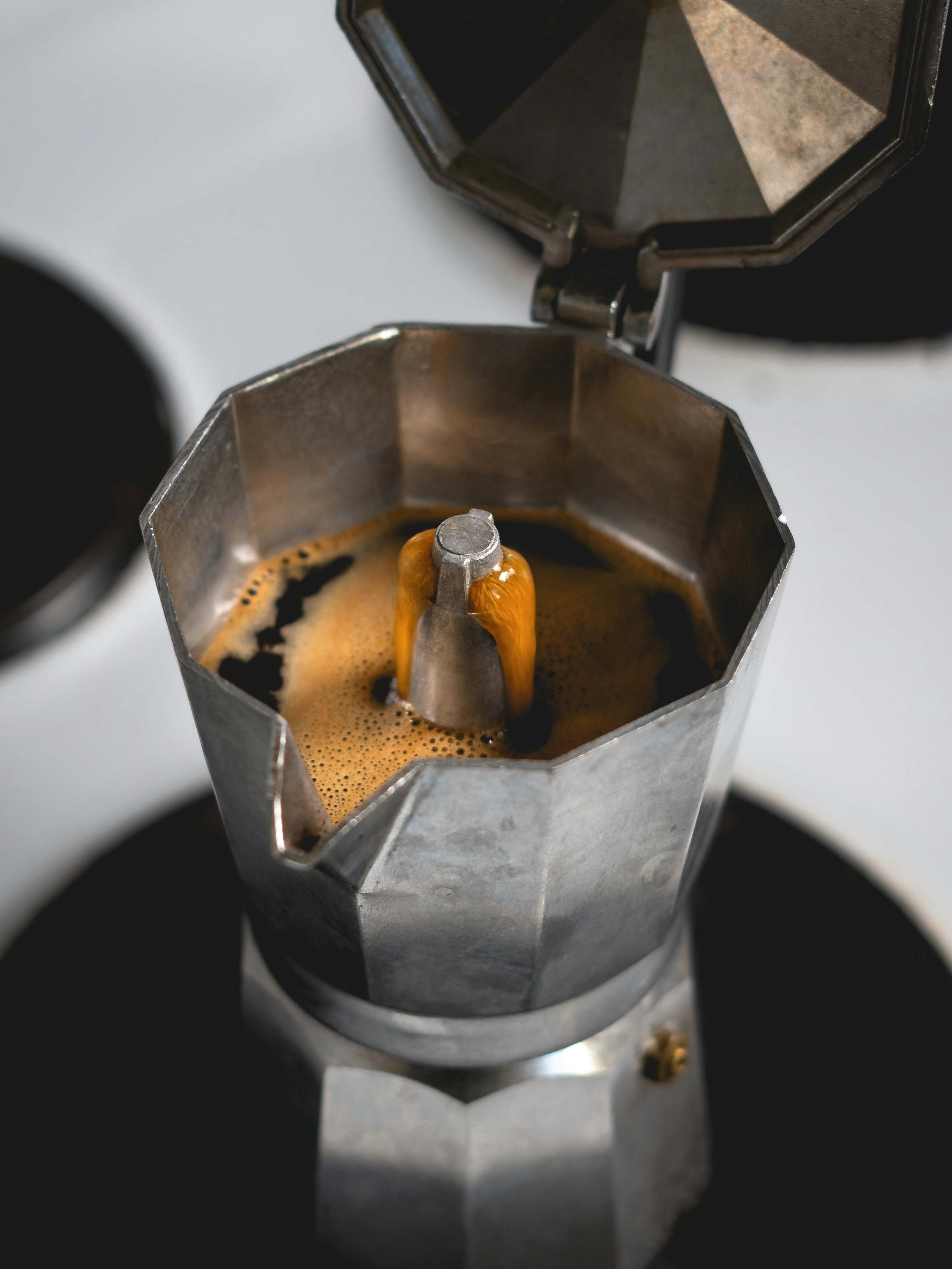
Learn how to make moka pot coffee with the right coffee-to-water ratio, grind size, heat and brewing technique while avoiding excessive bitterness. URL slug: