
Learn how to make smooth, refreshing cold brew coffee in a French press with this easy step-by-step guide, including the ideal coffee-to-water ratio.
Previous post
Pour Over Coffee: How Extraction Works and How to Brew Better Filter Coffee
Date
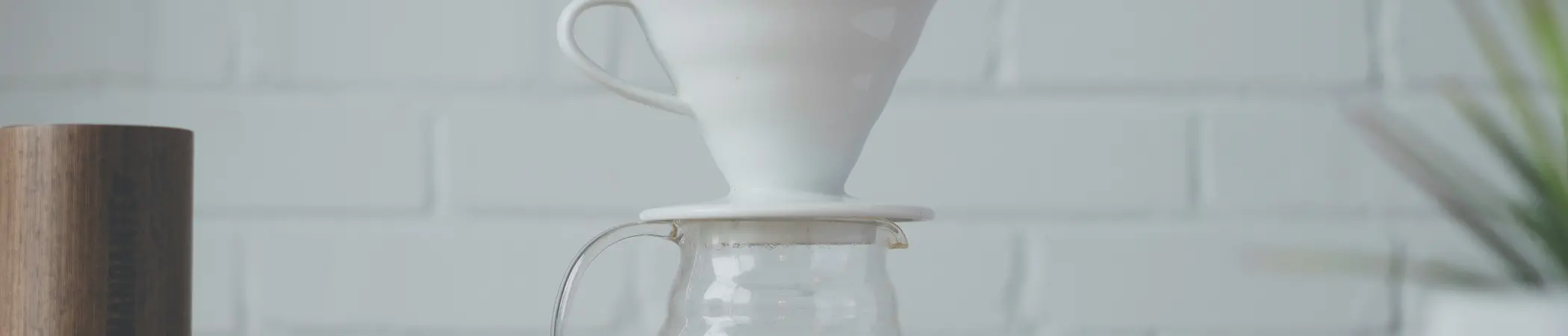
The term pourover describes a range of filter coffee brewing methods in which water is manually poured over ground coffee held inside a filter.
The principle is simple: water passes through the coffee grounds, extracting soluble compounds before flowing through the filter. The filter retains most of the coffee particles while allowing the brewed coffee to pass through.
Depending on the brewing method, the filter can be made from paper, cloth or metal.
Although pourover brewers come in many different shapes and designs, they all rely on the same basic principle: gravity-driven extraction. What changes is the way water interacts with the coffee and, consequently, how quickly and evenly the coffee is extracted.
Simple ways of brewing coffee over a cup or container have existed for a long time, but one of the most important developments came in 1908, when German entrepreneur Melitta Bentz patented the paper coffee filter.
Paper filtration made it possible to separate brewed coffee from the grounds much more effectively, producing a cleaner cup.
Before drip coffee makers became widespread, percolators were commonly used for home brewing. These devices repeatedly circulated hot water through the coffee grounds, which could result in excessively bitter coffee when extraction was too high.
Electric drip coffee makers later automated the process and remain popular around the world.
Today, there is a wide range of coffee brewers and filter brewing devices. Each has its own characteristics, but the fundamental goal remains the same: control the interaction between water and coffee to achieve a balanced extraction.
The result of a pourover brew depends on the relationship between several variables: coffee dose, water volume, grind size, temperature, contact time and pouring technique.
These variables are interconnected, so changing one can affect the others.
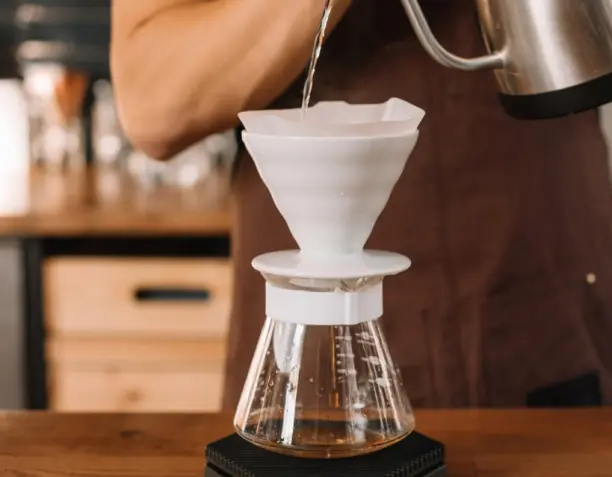
In pourover brewing, the way water is added has a significant influence on extraction.
A gooseneck kettle makes it easier to control flow rate and direct the water precisely. This is particularly useful for slow, consistent pours.
However, a gooseneck kettle is not essential for making good coffee at home. The important thing is to maintain reasonable control over the water flow and distribute the water evenly across the coffee bed.
Grind size has a major influence on extraction.
A finer grind increases the surface area in contact with water and generally slows the flow through the coffee bed. Under otherwise identical conditions, this can increase extraction.
A coarser grind allows water to pass through the coffee more easily and generally results in lower extraction.
This is why finding the right pourover grind size is one of the most important adjustments when dialing in a recipe.
Contact time is not simply the amount of time it takes for water to pass through the coffee. It is also influenced by how quickly water is poured.
A slower pour can increase the amount of time water remains in contact with the coffee. Likewise, a grind that is too fine can significantly slow down the flow.
The amount of coffee used also changes how the brew behaves.
A larger dose creates a deeper coffee bed, meaning that water has to pass through a greater layer of coffee particles. For this reason, coffee dose, water, grind size and brewing time should be considered together, rather than adjusting one variable in isolation.
Blooming, also known as pre-infusion, involves adding a small amount of water to the coffee grounds before beginning the main pour.
When freshly roasted coffee comes into contact with hot water, it releases some of the carbon dioxide trapped in the beans during roasting. This gas can cause the coffee bed to expand or “bloom.”
This is why brewers commonly wait around 20–40 seconds before continuing with the main pour.
Blooming also pre-wets the coffee bed and can help promote more even extraction, particularly when brewing very fresh coffee that still contains a significant amount of CO₂.
The process is straightforward:
Ground coffee is placed inside the filter.
Hot water is added in a controlled manner.
Water passes through the coffee and extracts soluble compounds.
The filter retains most of the coffee particles and, depending on its material, some of the oils.
The brewed coffee collects in a server or cup.
The filter material has a direct effect on the clarity, texture and body of the final beverage.
Metal filters use a fine mesh that allows more coffee particles and oils to pass into the cup.
The result is usually a coffee with more body, less clarity and some sediment. The beverage can feel richer and more textured than one brewed with paper.
Metal filters are highly reusable, but they need regular cleaning. Coffee oils can accumulate in the mesh and negatively affect flavor over time.
Cloth filters have been used for a long time and produce a result somewhere between paper and metal filtration.
They retain many coffee particles while allowing some oils through, resulting in a relatively clean cup with more body and a fuller finish.
Hygiene is particularly important with cloth filters. The filter should be thoroughly rinsed after every use and kept clean to prevent residue and stale flavors from building up.
Paper filters are the most common choice for modern pourover brewing.
They retain a large amount of coffee particles and oils, producing a cleaner, lighter cup with high flavor clarity.
The type of paper can also influence the final flavor. Some unbleached filters can contribute a slight papery taste if they are not properly rinsed before brewing.
For this reason, it is recommended to rinse the paper filter with hot water before adding the coffee.
For most pourover methods, a medium grind is a good starting point, roughly similar to the texture of granulated sugar.
However, there is no single “correct” grind size. The ideal grind depends on the brewer, filter, coffee, grinder and target brew time.
If the coffee drains too slowly and tastes bitter, dry or astringent, try a coarser grind.
If the water passes through the coffee too quickly and the cup tastes sharp, weak or underdeveloped, try a finer grind.
The recipe is only a starting point: the flavor in the cup is the final judge.
Pourover brewer and filter
Freshly roasted coffee
Water
Coffee grinder
Scale
Kettle
Timer
Grind the coffee immediately before brewing.
As a starting point, use approximately 60–65 g of coffee per liter of water.
For an individual brew, a practical recipe is 18 g of coffee for 300 ml of water.
Heat fresh water, preferably with a mineral composition suitable for coffee brewing.
Place the filter in the pourover brewer and rinse it thoroughly with hot water. This helps remove potential paper flavors while also preheating the brewer and serving vessel.
Discard the rinse water.
Place the freshly ground coffee in the filter and distribute it evenly.
Put the brewer on the scale and tare it.
Start the timer.
Pour approximately 30–40 g of water over the coffee, making sure the entire coffee bed is evenly saturated.
Wait approximately 20–30 seconds.
During this time, you should see the coffee bed expand as CO₂ is released.
After blooming, continue adding water slowly and evenly using a circular motion.
Avoid pouring directly onto the sides of the filter and try to maintain an even distribution of water across the coffee bed.
You can divide the main pour into 3–4 stages, depending on the recipe and brewer.
Once all the water has been added, allow the coffee to finish draining.
As a general reference, a brew may take approximately 2:30–3:00 minutes, although brew time alone does not determine whether extraction is correct.
Remove the filter and gently swirl the brewed coffee before serving.
Ratio: 1:16.7
Coffee: 18 g
Water: 300 ml
Temperature: approximately 94–95 °C
Target brew time: 2:30–3:00 min
Grind 18 g of freshly roasted coffee at a medium grind size.
Heat 300 ml of water to approximately 94–95 °C.
Place the filter in the pourover brewer and rinse it thoroughly with hot water.
Add the ground coffee and distribute it evenly.
Tare the scale and start the timer.
Pour 30 g of water to begin the bloom.
Wait approximately 30 seconds.
Add another 120 g of water evenly.
Continue with 100 g and finish with the final 50 g.
Allow all the water to pass through the coffee and check the total brew time.
Remove the filter and gently swirl the coffee before serving.
If the brew takes considerably longer than expected and tastes bitter or astringent, try a coarser grind. If the water drains too quickly and the coffee tastes sharp or underdeveloped, try a finer grind.
One of the main advantages of pourover coffee is the level of control it provides.
You can adjust grind size, water temperature, coffee-to-water ratio, the number of pours and flow rate to see how each change affects the cup.
There is no single perfect recipe for every coffee. Different origins, processing methods, roast profiles and lots can respond differently to the same brewing parameters.
The best way to learn is to change one variable at a time, taste the result and record what happens.
With practice, pourover becomes more than a brewing method: it becomes a tool for understanding coffee extraction and the individual characteristics of each coffee.
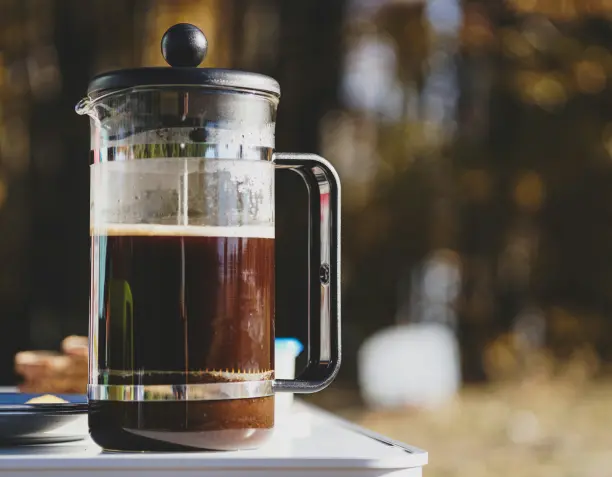
Learn how to make smooth, refreshing cold brew coffee in a French press with this easy step-by-step guide, including the ideal coffee-to-water ratio.
Learn how to brew better pour over coffee by mastering the seven variables that influence extraction, flavor, sweetness, and balance.
Learn how to make moka pot coffee with the right coffee-to-water ratio, grind size, heat and brewing technique while avoiding excessive bitterness. URL slug: