


Learn how to make smooth, refreshing cold brew coffee in a French press with this easy step-by-step guide, including the ideal coffee-to-water ratio.
Previous post
How to Make Better Coffee at Home: 6 Essential Tips | Blue Faro

Date
Pour over coffee is one of the most popular manual brewing methods in specialty coffee.
The basic principle is simple: hot water passes through a bed of ground coffee and then through a filter that retains the coffee particles.
Some of the best-known pour over brewers include the Hario V60, Chemex, Kalita Wave, and Clever Dripper. Although they all produce filtered coffee, each brewer has different characteristics that influence water flow, extraction, and the final cup.
At first glance, pour over brewing seems as simple as pouring hot water over ground coffee. In reality, several physical and chemical processes take place during brewing.
Understanding these processes makes it much easier to adjust a recipe and achieve a consistent result.
Pour over brewing can be understood through three interconnected processes:
These processes overlap throughout the brewing cycle and work together to determine the final extraction.
Pre-infusion, commonly called the bloom, involves wetting the coffee grounds with a small amount of water before the main pour.
Roasting produces gases, particularly carbon dioxide (CO₂), which remain trapped inside the structure of the roasted coffee bean.
When hot water comes into contact with the coffee, these gases begin to escape. This is why the coffee bed often expands and bubbles during the bloom.
The release of gas can temporarily interfere with water making full contact with the coffee particles.
For this reason, pour over recipes generally include a pre-infusion stage before the main brewing phase.
A common starting point is around 30–45 seconds, although there is no universal bloom time.
The amount of water is also important. Using approximately 2–3 times the weight of the coffee is generally enough to saturate the coffee bed.
For example:
20 g of coffee → 40–60 g of water for the bloom.
The goal is not simply to wait for a specific number of seconds. The important thing is to ensure that the coffee is evenly saturated before continuing the brew.
Once the coffee has been properly wetted, water begins dissolving the soluble compounds contained within the coffee particles.
Roasted coffee contains hundreds of compounds that contribute to flavor and aroma.
These include various organic acids, sugars, aromatic compounds, and other substances that influence sweetness, acidity, bitterness, body, and overall flavor.
Extraction does not happen instantly or uniformly.
Particle size, water temperature, contact time, and water chemistry all affect the rate and degree of extraction.
Once soluble compounds dissolve into the liquid, they must move from inside the coffee particles into the surrounding water.
The moving water transports these compounds through the coffee bed and eventually into the cup.
This is why pour over brewing is not simply about how long water remains in contact with coffee.
It is also about how water moves through the coffee bed.
Uneven water distribution can cause some areas to receive too much water while others receive too little.
The result can be uneven extraction, with some parts of the coffee being under-extracted while others become over-extracted.
Water temperature is one of the most important variables in filter coffee brewing.
In general, hotter water extracts soluble compounds more quickly, while cooler water slows the extraction process.
Water that is too cool can make extraction difficult, particularly with light-roasted, dense coffees.
On the other hand, excessively high temperatures can accelerate extraction and make certain coffees taste more intense or harsh.
As a starting point, many specialty coffees perform well with water between approximately 90 and 96 °C (194–205 °F), although the ideal temperature depends on the coffee and recipe.
Grind size determines how much coffee surface is available for contact with water.
A finer grind increases the available surface area and generally speeds up extraction.
A coarser grind reduces the surface area and slows the extraction process.
As a starting point:
Sharp, sour and weak coffee → try grinding finer.
Bitter, dry or astringent coffee → try grinding coarser.
These are only starting points. Brew time, temperature, water flow, and pouring technique can also influence the result.
Having the correct grind size is not enough.
The particles should also be reasonably uniform.
Every grinder produces a distribution of particle sizes, with some smaller and some larger particles.
Smaller particles extract more quickly, while larger particles require more time.
If the particle distribution is too uneven, under-extraction and over-extraction can occur at the same time.
This is why a good grinder is one of the most important tools for brewing consistent filter coffee.
The coffee-to-water ratio has a direct effect on the concentration of the final beverage.
A common starting point for pour over is approximately:
60–70 g of coffee per liter of water
This corresponds roughly to ratios between:
1:14 and 1:17
For example:
There is no perfect ratio for every coffee.
A higher water ratio generally produces a less concentrated beverage, while a lower ratio produces greater concentration.
The way water is added also affects extraction.
A gooseneck kettle provides greater control over the speed, direction, and amount of water entering the coffee bed.
Pouring height also matters.
Pouring from too high can increase agitation and disturb the coffee bed.
An overly aggressive pour can create uneven flow paths, while a very gentle pour may not provide enough agitation for consistent extraction.
The goal is to maintain a controlled and repeatable flow.
During pour over brewing, maintaining some water above the coffee bed can help keep the brewing temperature relatively stable.
When the coffee bed becomes completely exposed, it loses heat more rapidly.
However, this does not mean that a large amount of water should always remain above the coffee.
Water depth, pouring speed, and drainage all interact with each other, which means different brewers require different approaches.
Total brew time is another important variable.
As general starting points:
These should not be treated as strict rules.
The appropriate brew time depends on grind size, recipe, brewer, filter, water temperature, and coffee characteristics.
A longer brew time does not automatically produce a better cup.
The best way to adjust a recipe is to use the flavor of the coffee as your guide.
Try:
Try:
Whenever possible, change one variable at a time. This makes it easier to understand the effect of each adjustment.
As a starting point for a light- or medium-roasted specialty coffee:
20 g freshly ground coffee
320 g water
Approximate ratio: 1:16
92–96 °C / 198–205 °F
Medium, adjusted according to the brewer and brew time.
Add approximately 50 g of water and wait 30–45 seconds.
Continue pouring steadily and under control until reaching 320 g of total water.
Approximately 3–4 minutes.
From there, use the taste of the coffee to determine the next adjustment.
Brewing good pour over coffee is not about blindly following a recipe.
A recipe is simply a starting point.
Coffee changes depending on its origin, variety, processing method, density, roast level, and age, so brewing parameters should be adapted to each coffee.
A well-prepared pour over aims to balance:
sweetness + acidity + body + clarity + aroma
When these elements work together, pour over brewing allows the unique characteristics of a coffee to become highly expressive.
This is one of the reasons pour over remains such a popular method in specialty coffee: it provides a high level of control and makes it possible to observe and adjust almost every stage of the extraction.
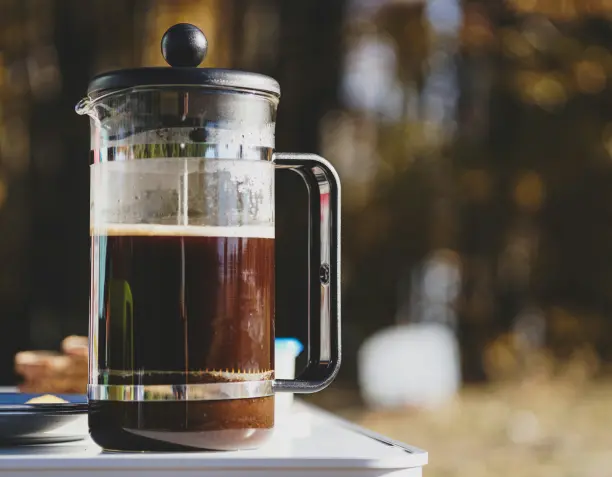
Learn how to make smooth, refreshing cold brew coffee in a French press with this easy step-by-step guide, including the ideal coffee-to-water ratio.
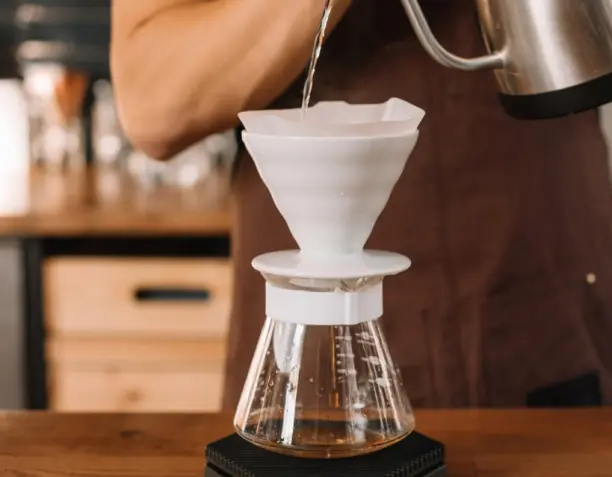
Learn how to brew better pour over coffee by mastering the seven variables that influence extraction, flavor, sweetness, and balance.
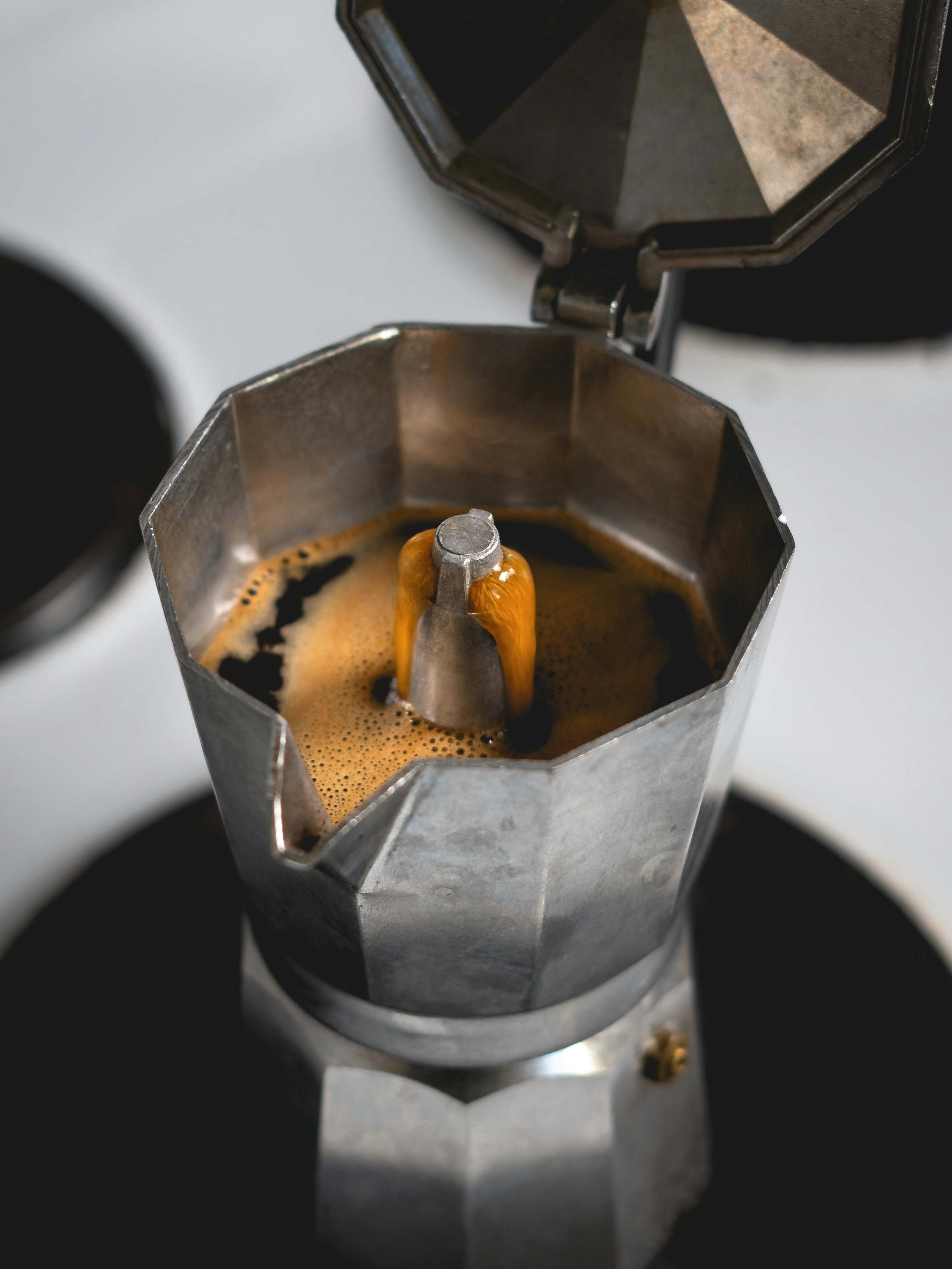
Learn how to make moka pot coffee with the right coffee-to-water ratio, grind size, heat and brewing technique while avoiding excessive bitterness. URL slug: