

Learn what Pu-erh tea is, how it's made, the differences between Sheng and Shu Pu-erh, and why it's one of the world's most unique fermented teas.
Previous post
What Is Pu-erh Tea? History, Types, Benefits & Brewing Guide | Blue Faro

Date
When brewing coffee, most people focus on grind size, water temperature, or brew time. Yet one concept has a greater impact on cup quality than almost any other: uniform extraction.
Understanding uniform extraction can completely change the way you brew espresso, pour-over, or French press coffee.
During brewing, hot water dissolves hundreds of soluble compounds from roasted coffee.
Some contribute sweetness, aroma, and complexity, while others create bitterness, dryness, or vegetal flavors.
The goal is to extract as many desirable compounds as possible without over-extracting the less pleasant ones.
However, coffee is never extracted perfectly evenly.
Every dose of ground coffee contains thousands of individual particles.
Although they appear similar, each particle differs slightly in size, shape, density, and internal structure.
As water flows through them, each particle extracts at a slightly different rate.
Some become under-extracted.
Some reach ideal extraction.
Others become over-extracted.
A cup of coffee is therefore the result of thousands of tiny extractions happening simultaneously.
Uniform extraction simply means that most of those particles finish at nearly the same extraction level.
The closer they are to one another, the sweeter, cleaner, and more balanced the coffee tastes.
Imagine brewing coffee using a mixture of very fine and very coarse grounds.
Fine particles extract rapidly and may become over-extracted.
Large particles extract more slowly and remain under-extracted.
The resulting cup combines bitterness, sourness, astringency, and muted sweetness—all at the same time.
Even if the average extraction looks correct, the flavor lacks clarity.
A useful way to visualize this concept is through an extraction spectrum.
At one end lie under-extracted particles.
In the middle are ideally extracted particles.
At the opposite end are over-extracted particles.
The wider this spectrum becomes, the less consistent the cup.
A narrow spectrum means more particles are clustered around the ideal extraction zone, producing greater sweetness, clarity, and balance.
Uniform extraction doesn't create new flavors.
Instead, it allows the coffee's natural character to shine through.
A more even extraction generally delivers:
Unwanted bitterness and harshness are reduced, making origin characteristics easier to recognize.
Several factors determine how evenly coffee extracts.
A high-quality burr grinder produces a much narrower particle-size distribution than a blade grinder or a low-quality burr grinder.
This is one of the biggest reasons why investing in a good grinder often improves coffee more than upgrading the brewer itself.
Even roasting promotes more consistent extraction.
Unevenly roasted beans may contain areas that dissolve at different rates, making brewing less predictable.
Uniformity begins before roasting.
Beans with consistent density, size, and ripeness roast more evenly and extract more consistently.
Distribution, pouring technique, agitation, brew ratio, and water temperature all influence how evenly water extracts flavor from every coffee particle.
Perfect uniformity is impossible, but you can get remarkably close by:
Each improvement narrows the extraction spectrum and allows more of the coffee's natural sweetness and complexity to emerge.
Uniform extraction is one of the foundations of specialty coffee.
Rather than simply extracting more coffee, the goal is to ensure that most coffee particles extract at nearly the same rate.
The result is a sweeter, cleaner, and more expressive cup that better reflects the coffee's origin, variety, and roast.
At Blue Faro, we believe that great coffee deserves careful preparation. Thoughtful roasting combined with uniform extraction allows every coffee to reveal its full potential.
Learn what Pu-erh tea is, how it's made, the differences between Sheng and Shu Pu-erh, and why it's one of the world's most unique fermented teas.
Learn the difference between acidic coffee and coffee with pleasant acidity. Discover how natural coffee acids shape the flavor of specialty coffee.
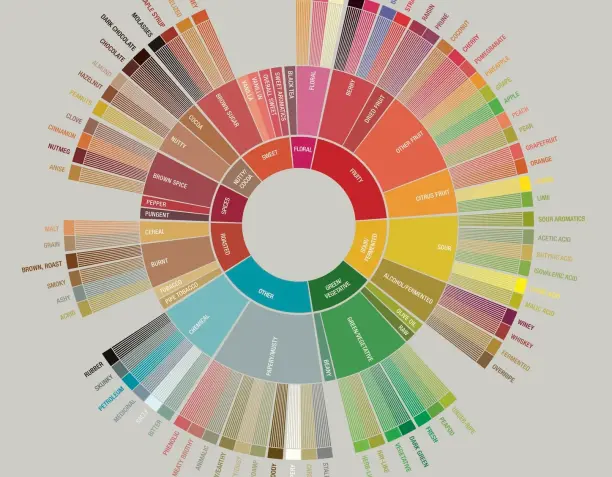
Learn why specialty coffee can taste like fruit, chocolate, flowers, or caramel without containing any additives. Discover what coffee descriptors really mean.