


Learn how to compare different espresso extraction levels with a simple tasting experiment. Discover how to identify under-extraction, over-extraction and balance.
Previous post
Espresso Brew Ratio: How to Choose the Right Ratio for Your Espresso

Date
Tamping is one of the most important steps in espresso preparation. Its main purpose is to compact the ground coffee and create a uniform puck that allows water to flow through the coffee bed as evenly as possible.
For years, the amount of pressure required for tamping has been surrounded by rules, advice, and myths.
Should you tamp with 10 kg, 15 kg, or 20 kg of pressure? Is there a perfect tamping force?
The answer is much simpler than it may seem.
In practice, the exact amount of tamping pressure is less important than creating a level, compact, and consistent coffee puck.
After coffee is ground and dosed into the portafilter, there are small spaces of air between the particles.
If the coffee is not properly distributed and compacted, water can find areas of lower resistance and flow through them more quickly.
The purpose of tamping is to reduce these air spaces and create a compact, uniform coffee bed.
When water encounters an area with lower density, it tends to flow through that area more easily.
This can lead to channeling, where water passes through certain parts of the puck much faster than others.
The result is uneven extraction.
Some coffee particles may become over-extracted while others remain under-extracted.
Therefore, the main goal of tamping is not to apply a specific number of kilograms of pressure, but to create a level, compact, and uniform puck.
Tamping cannot fully correct poor coffee distribution.
Before using the tamper, the grounds should be distributed evenly throughout the portafilter.
If some areas contain significantly more coffee than others, tamping may compact the entire bed without eliminating those differences.
A consistent puck preparation should therefore follow a logical sequence:
dosing → distribution → leveling → tamping
The more evenly the grounds are distributed before tamping, the more uniform the resistance of the coffee bed will be.
This is one of the most common questions among new espresso baristas.
For many years, specific numbers such as 15 kg or 20 kg were commonly recommended.
However, there is little reason to obsess over an exact pressure number.
The main function of tamping is to compact the coffee until the puck reaches a sufficiently dense and stable structure.
Once the coffee is no longer being significantly compressed, applying substantially more force has a much smaller effect on puck density.
A simple approach is therefore:
Consistency is more important than chasing a specific pressure number.
Coffee particles contain air spaces between them.
As pressure is applied, these spaces become smaller and the particles rearrange themselves into a more compact structure.
Eventually, the coffee becomes much more resistant to further compression.
This can be understood as the practical maximum density of the coffee bed.
Beyond this point, applying significantly more force does not create a proportional increase in compaction.
This has an important practical consequence for baristas:
extreme tamping pressure is not necessary to create a good espresso puck.
The goal is to achieve adequate and repeatable compaction, not to see how hard you can tamp.
Baristas repeat the same movements hundreds of times during a working day.
A tamping technique that requires excessive force can create unnecessary strain on the wrist, forearm, elbow, or shoulder.
From an ergonomic perspective, it makes more sense to use the minimum force necessary to create a properly compacted and level puck.
Body position and wrist position also matter.
The tamper should remain level, and the movement should be controlled without excessive lateral pressure.
One common mistake is using tamping pressure to manipulate espresso extraction time.
Under normal circumstances, the primary variable used to control espresso flow is grind size.
If an espresso runs too quickly, the usual adjustment is to grind finer.
If it runs too slowly, the usual adjustment is to grind coarser.
Deliberately changing tamping pressure to achieve different shot times makes consistency much more difficult.
It is much easier to maintain a consistent tamping technique and use grind size to control flow.
Leveling is essential.
An uneven puck can have different densities and flow resistance across its surface.
Water will tend to follow paths of lower resistance, increasing the risk of channeling.
A flat-base tamper can make it easier to create an even coffee bed when used correctly.
However, even the best tamper cannot compensate for poor technique.
Wrist position, arm stability, and coffee distribution before tamping are equally important.
This technique is commonly known as tamp polishing.
It involves rotating the tamper slightly after the main tamp in order to create a smoother surface on the coffee puck.
Although it was once a common practice in coffee shops, it is not necessary for producing good espresso.
Water does not require a perfectly polished surface to flow evenly through the coffee.
What matters is the distribution and density of the coffee bed.
The main issue with tamp polishing is not that a slightly uneven surface is inherently harmful.
The problem is that it introduces another unnecessary movement into a stage where consistency is already important.
If additional pressure is applied during the rotation, or the tamper is lifted, dropped, or tilted slightly, the density of the puck can be altered.
Even a small tilt can create differences in resistance across the coffee bed.
For this reason, once the puck has been properly compacted, it is generally preferable to lift the tamper straight up and continue with the preparation.
Channeling is one of the main causes of uneven espresso extraction.
It can occur because of significant differences in puck density, poor distribution, uneven grinding, or other preparation issues.
When water finds a path of lower resistance, it can flow rapidly through one area of the coffee puck.
This means that some parts of the puck receive significantly more water than others.
The resulting espresso may show a combination of unpleasant characteristics such as:
When an espresso tastes unpleasant, tamping is not necessarily the only problem.
Grind size, distribution, puck geometry, pressure, pre-infusion, and other variables can all contribute to channeling.
A consistent tamping routine can be reduced to a few simple principles:
Before tamping, make sure the grounds are evenly distributed throughout the portafilter.
Avoid tamping with the tamper tilted.
There is no need to chase an exact pressure number. Compact the coffee until the puck is stable and properly formed.
Use grind size as the primary adjustment for espresso flow.
After tamping, there is no need to knock, spin, or excessively manipulate the puck.
A simple technique that can be repeated consistently is more useful than a complicated technique that is difficult to reproduce.
Tamping should not become a competition of strength.
A good espresso begins long before the tamper is used: with appropriate grind size, consistent dosing, and even coffee distribution.
The tamper completes this process by creating a compact and level puck.
Once that has been achieved, there is no need to complicate the process.
In espresso preparation, consistency is usually more important than force.
Distribute evenly, tamp level, use sufficient pressure, and avoid unnecessary movements.
These simple principles can help create more repeatable espresso extractions and improve cup quality.
Most importantly, tamping should be a tool for improving espresso — not another source of unnecessary myths and complications.
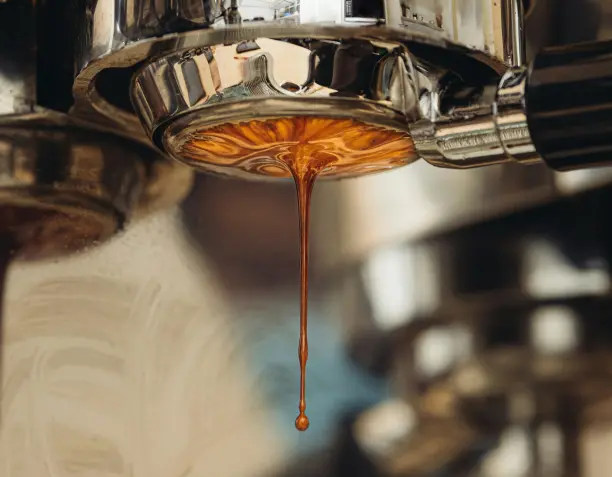
Learn how to compare different espresso extraction levels with a simple tasting experiment. Discover how to identify under-extraction, over-extraction and balance.
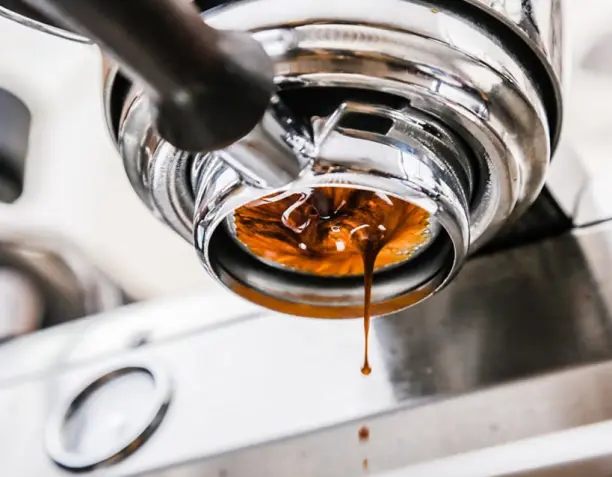
Learn why coffee distribution matters before tamping, how WDT works, and how better puck preparation can help reduce channeling and improve espresso consistency.

Learn how to make the perfect espresso with this professional step-by-step guide. Discover the ideal grind size, extraction time, tamping technique and barista tips for better coffee.