
Learn how to compare different espresso extraction levels with a simple tasting experiment. Discover how to identify under-extraction, over-extraction and balance.
Previous post
Coffee Extraction: How Time and Grind Size Affect Your Cup

Date
In specialty coffee, one of the most common ways to describe an espresso recipe is through the espresso brew ratio (EBR).
EBR describes the relationship between the weight of ground coffee used and the weight of espresso produced.
For example:
18 g of coffee → 36 g of espresso = 1:2 ratio
Likewise, using 20 g of ground coffee to produce 40 g of espresso gives a 1:2 ratio.
Although the 1:2 ratio has become a common reference point for espresso, it should not be treated as a universal rule. The ideal ratio depends on the coffee, roast level, grinder, espresso machine, recipe, and, importantly, how the espresso will be served.
Brew ratio is closely connected to two fundamental concepts in coffee brewing:
These two measurements are closely related.
For example, if 20 g of coffee produces 40 g of espresso with a TDS of 10%, approximately 4 g of dissolved coffee material are present in the beverage.
If those 4 g came from 20 g of coffee, the extraction yield would be approximately 20%.
This demonstrates why brew ratio affects the relationship between beverage concentration and extraction.
There is therefore no single combination of brew ratio, TDS, and extraction yield that is ideal for every coffee.
A 1:2 ratio can be an excellent starting point, but it is not necessarily the optimal recipe for every espresso.
The recipe should be adapted to several factors.
A light-roasted coffee with a highly aromatic, floral, or fruit-driven profile may benefit from a different recipe than a medium- or dark-roasted espresso.
Delicate coffees can sometimes perform well with higher brew ratios, while coffees designed for milk-based drinks may benefit from greater concentration.
Extraction performance also depends on the grinder and espresso machine.
Equipment capable of producing a more uniform grind, stable temperature, consistent pressure, and controlled pre-infusion can make it easier to achieve efficient and even extraction.
As a result, two cafés can use exactly the same coffee and obtain very different results from the same recipe.
An espresso served straight does not have the same requirements as an espresso intended for a latte or cappuccino.
When espresso is combined with a significant amount of milk, a low concentration can cause its flavor to disappear.
For straight espresso, on the other hand, a higher ratio can sometimes provide greater clarity and make the coffee's individual characteristics easier to perceive.
Increasing the brew ratio means producing more beverage from the same amount of ground coffee.
For example:
As the brew ratio increases, beverage concentration (TDS) generally decreases, while the total amount of coffee material extracted can increase.
This can result in an espresso that is:
However, increasing the ratio indefinitely does not necessarily improve the cup. At some point, additional extraction may begin to introduce less desirable flavors.
A shorter ratio, such as 1:1 or 1:1.5, produces a more concentrated beverage.
It can provide:
However, an excessively short ratio can limit total extraction and produce an unbalanced espresso, particularly when combined with a grind size or preparation technique that makes even extraction difficult.
A ristretto is therefore not automatically better simply because it is more concentrated.
There is no universal extraction yield that can be considered perfect for every coffee.
In practice, many enjoyable espressos fall within a relatively broad range of extraction yields. What matters is how the coffee tastes, rather than chasing a single number.
Under-extraction can produce:
Over-extraction can produce:
However, there is an important distinction:
A bitter or astringent espresso is not necessarily over-extracted.
Channeling occurs when water finds paths of lower resistance through the coffee puck.
Instead of flowing evenly through the entire bed, some water preferentially travels through specific areas.
This can cause certain parts of the coffee bed to become over-extracted while others remain under-extracted.
The resulting espresso may combine:
Before assuming that an espresso is over-extracted, it is therefore worth checking distribution, grind size, puck preparation, tamping, and water flow.
There is no universal recipe, but a simple approach is to start with a reference ratio and gradually adjust it.
For example, if your usual recipe is:
18 g → 36 g in 30 seconds
you could test:
18 g → 45 g
or even:
18 g → 54 g
while keeping the other variables as consistent as possible.
The comparison should be made in the cup.
Does the espresso have more sweetness?
Is the acidity more balanced?
Are the flavors clearer?
Has too much body been lost?
Does the finish become dry or bitter?
These questions are more useful than automatically following a predetermined ratio.
The ideal recipe can change significantly depending on the final beverage.
A higher ratio may work well when the goal is clarity, complexity, and a cleaner expression of the coffee.
The espresso needs enough concentration to maintain its character alongside the milk.
Because a latte contains a relatively large amount of milk, an overly dilute espresso can lose much of its intensity. A recipe providing sufficient concentration and dissolved coffee material may therefore work better.
A short ratio produces a highly concentrated and dense beverage, but that does not automatically mean the extraction is optimal.
The 1:2 ratio is an excellent starting point, but it should not become a rigid rule.
The best espresso comes from finding the right balance between:
Instead of asking “What is the correct espresso ratio?”, it is more useful to ask:
“What brew ratio allows this particular coffee to perform best with this equipment and this beverage?”
The answer might be 1:1, 1:2, 1:2.5, 1:3, or somewhere in between.
In specialty coffee, recipes are tools rather than rules. The ultimate goal is always the same: to produce a balanced, sweet, enjoyable cup that allows the coffee to express its full potential.
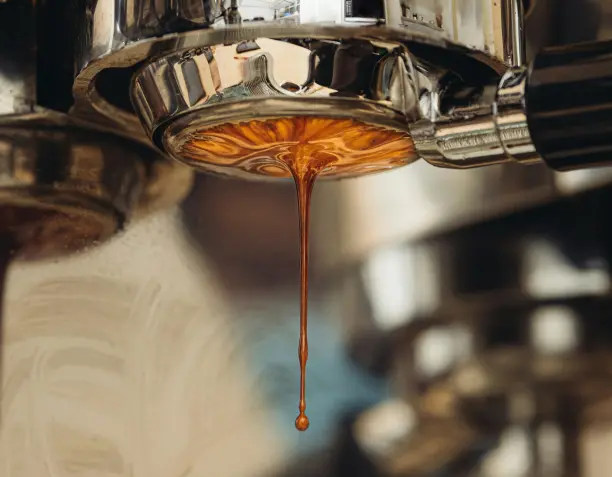
Learn how to compare different espresso extraction levels with a simple tasting experiment. Discover how to identify under-extraction, over-extraction and balance.
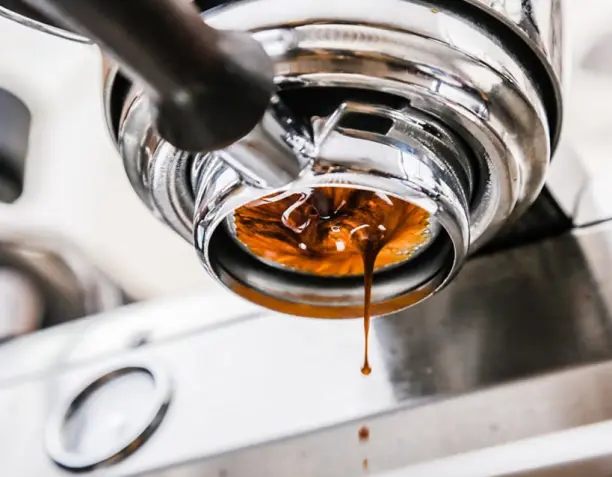
Learn why coffee distribution matters before tamping, how WDT works, and how better puck preparation can help reduce channeling and improve espresso consistency.

Learn how to make the perfect espresso with this professional step-by-step guide. Discover the ideal grind size, extraction time, tamping technique and barista tips for better coffee.