
We decode the most popular certifications: Fair Trade, Direct Trade, Rainforest Alliance, Organic, Cup of Excellence, UTZ, etc.
Previous post
Arabica vs Robusta: What’s the Difference?
Date
Coffee is much more than its country of origin or brewing method. Behind every cup lies a combination of species, variety, processing method, and terroir, all of which shape the coffee's aroma, sweetness, acidity, and body.
In this guide from Blue Faro, you'll learn about the main coffee species, the most important Arabica varieties, and how each one influences the flavor in your cup.
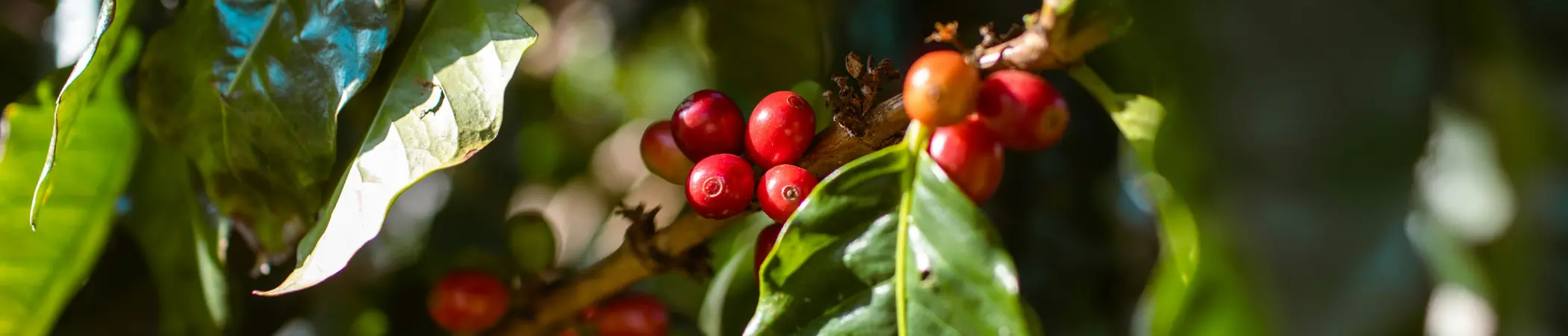
Coffee comes from the botanical genus Coffea, a member of the Rubiaceae family. Scientists have identified more than 120 coffee species, ranging from small shrubs to trees that can grow up to 18 meters tall in tropical regions around the world.
Although many species exist in nature, only a few are commercially cultivated.
The three best-known species are:
Today, Arabica and Robusta account for almost all coffee produced worldwide, while Liberica is grown only in small quantities in countries such as the Philippines and Malaysia.
Coffea arabica represents around 60–70% of global coffee production and is considered the benchmark for specialty coffee.
Its main characteristics include:
Most coffees roasted by Blue Faro belong to this species.
Coffea canephora, commonly known as Robusta, is valued for its resilience against pests, diseases, and high temperatures.
Its naturally higher caffeine content helps protect the plant from insects while allowing farmers to achieve higher yields.
Typical characteristics include:
Robusta is widely used in espresso blends, particularly in Italy, where it contributes a rich crema, a heavier body, and a stronger caffeine kick.
The biggest difference lies in the cup.
Arabica offers a much broader spectrum of flavors, including chocolate, caramel, berries, citrus, flowers, tropical fruits, and nuts.
This diversity comes from the large number of Arabica varieties, many of which developed through natural mutations or selective breeding over centuries.
Most modern Arabica varieties descend from two historic lineages:
These two varieties became the genetic foundation of countless cultivars now grown across Latin America, Africa, and Asia.
From them emerged well-known varieties such as Caturra, Catuaí, Mundo Novo, Pacas, Villa Sarchi, and many others.
Typica is one of the oldest known Arabica varieties and forms the genetic basis for many modern cultivars.
Although it has relatively low productivity and moderate disease resistance, it remains highly valued for its clean, balanced, and elegant cup profile.
Originally discovered on Réunion Island (formerly Bourbon Island), Bourbon is a natural mutation of Typica.
Compared with Typica, Bourbon generally produces 20–30% more cherries while offering greater sweetness, excellent balance, and a silky mouthfeel.
Many famous varieties—including Caturra, Catuaí, Pacas, and Mundo Novo—descend from Bourbon.
A natural mutation of Bourbon discovered in Brazil during the 1930s.
Its compact size makes harvesting easier, while its excellent performance at elevations above 1,200 meters has made it one of the most widely planted varieties in Colombia and Central America.
Developed in Brazil by crossing Caturra and Mundo Novo, Catuaí combines high productivity with good resistance to strong winds.
It produces balanced coffees with bright acidity and consistent cup quality.
Originally from Ethiopia, Geisha became internationally famous through Panama's award-winning coffees.
It is celebrated for its highly expressive floral profile, often displaying notes of:
Today, Geisha is regarded as one of the world's most prestigious specialty coffee varieties.
A hybrid between Bourbon and Typica, Mundo Novo offers excellent productivity and good disease resistance.
Its cup profile is generally balanced, sweet, and medium-bodied.
Developed in El Salvador by crossing Pacas and Maragogipe, Pacamara produces exceptionally large beans with floral aromas, vibrant acidity, and remarkable complexity.
Developed by Scott Laboratories in Kenya during the 1930s, these varieties are famous for their vibrant acidity and fruit-forward profiles.
SL-28 is particularly known for its distinctive blackcurrant notes, while SL-34 offers juicy sweetness and excellent complexity.
A natural dwarf mutation of Bourbon discovered in Costa Rica.
It is highly productive, well suited to mountainous regions, and produces sweet, clean coffees with bright acidity.
Variety plays an important role, but it is only one piece of the puzzle.
The final cup is also influenced by:
This is why two coffees of the same variety can taste completely different.
Understanding coffee species and varieties allows you to appreciate the incredible diversity behind every cup.
At Blue Faro, we carefully select specialty coffees based on quality, traceability, and sensory potential, ensuring that every origin and every variety expresses its unique character after roasting.
Whether you enjoy the sweetness of a Bourbon, the brightness of a Caturra, or the floral elegance of a Geisha, every variety tells its own story.

We decode the most popular certifications: Fair Trade, Direct Trade, Rainforest Alliance, Organic, Cup of Excellence, UTZ, etc.
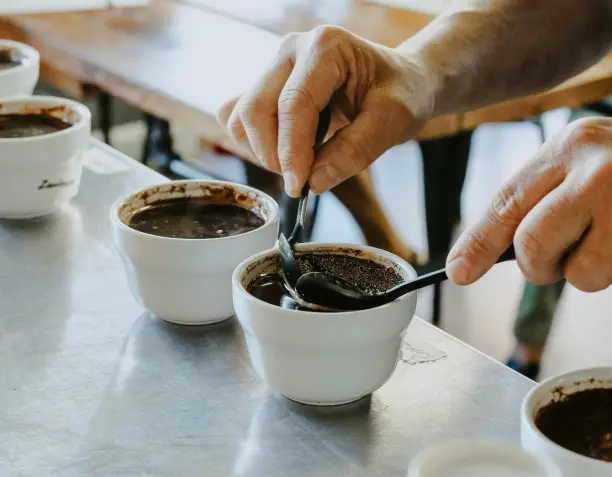
Learn the meaning of key coffee tasting terms, including aroma, acidity, body, balance, complexity, flavor, and aftertaste.
What is a coffee blend and why do roasters combine different coffees? Learn how blends are created, their advantages and the role of coffee extractivity.